Pathways to Progress: Residential Recovery Expansion
A Mid-Barrier Residential Recovery Model Where Housing Becomes the Cornerstone of Stability
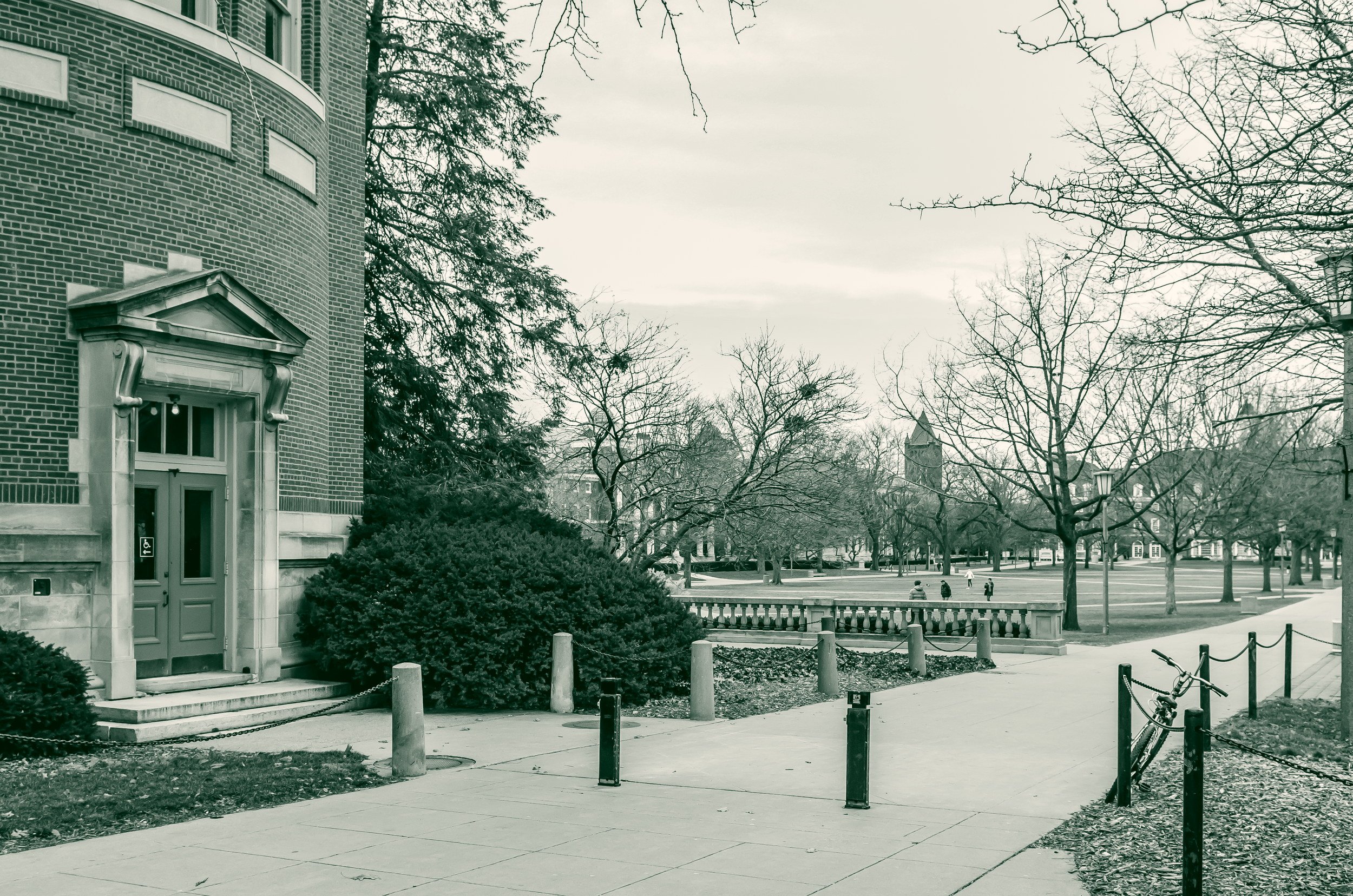
C-U at Home used Illinois opioid settlement funding to complete a $1.9 million renovation of a single-site entry-level shelter in Champaign, consolidating a scattered-site model into a 26-bed dormitory facility that anchors the agency's 12- to 18-month Pathways to Progress program. Ten beds are reserved for opioid-impacted adults, and the renovation expanded entry-level capacity by about 40 percent for the agency's most chronically unhoused, substance-impacted clients.
The Challenge They Were Addressing
For years, Champaign County had a low-barrier emergency shelter and a scattering of other homeless services, but no structured, longer-term residential option for chronically homeless adults who wanted to work a program toward stability. When the local township took over the low-barrier shelter, C-U at Home identified a clear gap: people experiencing long-term homelessness who were ready for recovery, mental health care, and life-skills work had no mid-barrier residential setting that could hold them for the 12 to 18 months that kind of change typically requires.
The agency's first response was a scattered-site model: seven homes in the community, each serving entry-level clients. The homes worked, but the operational math did not. Each entry-level house needed 24/7 staffing, and paying for that across seven separate locations was not sustainable. At the same time, the local drug court judge kept identifying housing stability as the single biggest gap for the clients coming through his courtroom, most of whom were opioid-impacted and cycling between short stays, relapse, and re-arrest.
That convergence, an operational ceiling on the scattered-site model and a clear demand signal from the drug court, drove the decision to consolidate entry-level services into a single renovated building. Staff understood what partners and clinicians across the country repeat: sobriety is very difficult to sustain without housing. If the opioid settlement dollars could make a physical space possible, the rest of the program model the agency had been refining could finally serve more clients at once.
What They Built
Pathways to Progress is a 12- to 18-month mid-barrier residential program for chronically homeless adults, with a strong concentration of clients in active recovery from opioid and other substance use. Clients are selected from a standing wait list (roughly 50 people at any given time) using a vulnerability index, with priority going to those who have experienced chronic homelessness, substance use, and co-occurring mental health conditions. Of 26 entry-level beds, 10 are reserved for opioid-impacted adults, including about seven spots typically held by drug court participants.
The program runs in four 90-day phases, each with its own goals and increasing independence. In the first 90 days, clients receive a lot of hands-on support: transportation to appointments, grocery trips, benefits applications, a mental health assessment, and linkage to a primary care provider. As clients progress, they take on more of those tasks themselves, with staff coaching rather than carrying. After completing Pathways, clients can move into one of seven advanced-phase houses the agency still operates in the community, providing a stepped pathway from shelter to semi-independent living.
The renovated building on Mattis Avenue in Champaign is organized dormitory-style. A public-facing front area serves community members and donors. A secured fob entry separates the residential wing, where men and women share a common living area, technology center, laundry, and gym, and then split into gender-separated wings, each with its own kitchen and living room. Rooms are shared by two clients, with a private bathroom for every two. The layout is intentional: shared common space to build community, private space for rest, and a physical separation between visitors and the home residents are building together.
Services are delivered by a layered team. A director of residential services and a director of recovery support anchor clinical and programmatic oversight. Case managers develop individualized stability plans covering housing, income, workforce development, physical and mental health, and recovery. A separate life-skills team coaches day-to-day practical skills, from cooking and budgeting to emotional regulation and conflict resolution. Recovery clients meet weekly with the director of recovery support to set and track a recovery case plan, including meeting attendance, sponsor relationships, and trigger work. Classes such as Seeking Safety and Living Sober are offered on site.
Key Program Components
Who You Need at the Table
What made a willing partner essential vs. optional?
A required partner, in this model, is one the program cannot operate without. The Opioid Task Force controlled whether the capital project happened at all, so that relationship was essential from the first application through site tours and reporting. Drug court is required because it supplies the steady pipeline of opioid-impacted referrals the reserved beds were designed for, and because the shared phases language lets the judge and the case management team speak as one. Rosecrance is required because Pathways links clients to clinical treatment rather than delivering it in-house. The cities provided a funding layer the project could not have closed without, and a special-use permit the building required before opening.
Helpful partners expand what the program can do without being a prerequisite for launch. Township supervisors, the Continuum of Care, Parkland College, the recovery communities, and local businesses all deepen the network around each client. They matter, but the program would still operate on day one without any single one of them. In a community like Champaign-Urbana, where public sentiment is broadly supportive of homeless services, the breadth of helpful partners is also what makes the program feel like a community project rather than a single agency's effort.
Budget Breakdown
What is the minimum viable budget to replicate this?
A capital project of this size is not the only path to the same goal. A smaller county starting with $75,000 and no building should not try to replicate a 26-bed renovation. The minimum viable version is housing plus program, delivered at whatever scale the building stock and operating budget support: a duplex or small house that can serve four to six entry-level clients, one director-level staff member who can coordinate a phased program, a partnership with an existing clinical provider for mental health and substance use services, and a clear referral agreement with the local drug court. What does not compress is 24/7 on-site coverage; any residential model requires at least two staff in the building at all times for safety. A modest camera and access-fob setup, built into the space from the start, is what makes the two-staff minimum feasible.
What Worked and Why
Specific decisions or design features that drove success
Consolidating into a single-site facility was the decision that made the program financially and operationally sustainable. Running seven scattered entry-level houses with 24/7 staffing in each location had hit a ceiling. One renovated building with a shared common wing and two gender-separated living wings lets the agency maintain the minimum two-staff, typically three-staff coverage model with the same safety standard the scattered model required, at a fraction of the payroll.
Using opioid settlement dollars for capital, not operations, was the right fit for this agency at this moment. The program already existed. The staff model already existed. What the agency did not have was a building big enough to absorb growth. A one-time capital grant moved the bottleneck in one step. Trying to use the same $580,000 for ongoing staff, clinical services, or transportation would have produced a 12 to 24 month bump in capacity that disappeared when the grant did.
Aligning the program structure with drug court around 90-day phases turned a referral relationship into a working partnership. When the judge says Pathways compliance is drug court compliance, and the case management team can speak to progress in the same phase language the court uses, clients get a coherent set of expectations instead of two competing ones. Seven of the opioid-reserved beds are held by drug court participants at any given time, which is a high share of the program and a signal of how tightly the two systems are now coupled.
Separating the 24/7 life-skills coaching from clinical recovery work gave every client two kinds of expertise without stretching any one role too thin. Case managers carry the seven-domain stability plan. The director of recovery support meets weekly with each recovery client on the recovery case plan. Life-skills staff coach the everyday practicals, the bedding, the budgeting, the bus routes. Clients encountering the program get clarity about who does what, and staff avoid the role drift that sinks smaller residential models.
Investing in the physical environment paid compound returns. The renovated space signals to clients that someone has taken their housing seriously, which anchors the mindset work case managers lead during the first 90 days. The extensive 43-camera security system lets the program operate safely with two staff when needed, which keeps the staffing model achievable. A dormitory-style layout with shared common wings and private living wings produces natural group life while still giving residents a place to decompress.
Early outcomes and data
26 entry-level beds operational in the single-site facility as of March 2026 (16 men, 10 women).
Entry-level capacity expanded by approximately 40 percent over the previous scattered-site model.
10 beds reserved for opioid-impacted adults; approximately 7 drug court participants housed at any given time.
Standing wait list of roughly 50 people, indicating sustained demand well above current capacity.
Staffing floor maintained at minimum two staff in building at all times (typically three), supported by a 43-camera safety system.
Seven advanced-phase community homes continue to operate as the next housing step for clients completing Pathways.
12- to 18-month program length with low turnover; most clients complete the program once admitted.
Formal outcome data for the new facility expected in FY 2027 as the first full cohort moves through the 12- to 18-month program in the consolidated building.
Lessons Learned
Pick the one big thing the grant can do. The agency considered splitting the settlement award across building, a van, and a few other needs. Concentrating the full $580,000 on the renovation was the right call. Settlement dollars are more useful when they are applied to the one capacity constraint the program cannot solve any other way, rather than stretched across smaller needs.
Location matters more than it seems. The new facility is on the city edge rather than downtown. A bus route serves the area, but trips now require a transfer where they used to be direct. Next time, a building search would weigh transit connectivity alongside square footage. For a population that depends on public transit, a harder commute can erase some of the gains a bigger building delivers.
Normalize life-skills coaching as human work. Clients sometimes frame budgeting or emotional regulation as things they have to learn because they are poor or were homeless. Reframing those as human tasks everyone works on permanently shifts how clients engage with the material. That reframing is part of the program, not a side effect of it.
Handle rule violations as clinical, not punitive, whenever possible. Immediate dismissal is reserved for violence or use of substances on the property. Everything else, including off-site use, is treated as information about what preceded the event and what the client now needs. That approach has kept dismissals rare and completion rates high.
Give the first 90 days more support than feels necessary. New clients are still in survival mode for much of the first three months. Transporting them to appointments, walking them through benefit applications, taking them to food banks, and teaching them the bus system as they go looks like a lot of staff time up front. It pays back in every subsequent phase because clients have actually learned the steps rather than being handed a list.