Multidisciplinary Homeless Response Team
A Peer-Led, Street-Based Model for Ending Unsheltered Homelessness
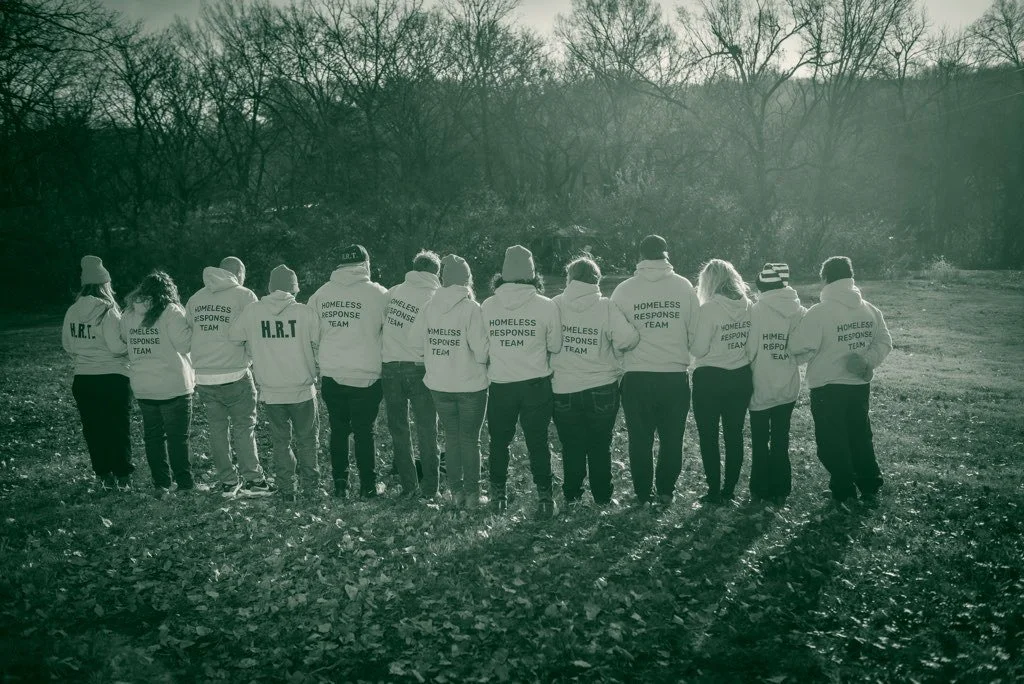
The City of Lawrence built a six-person, peer-led outreach team that meets people experiencing homelessness where they are, in encampments, under bridges, and on the streets, delivering substance use assessments, street medicine, case management, and aftercare to reduce unsheltered homelessness by over 60% in one year.
The Challenge They Were Addressing
Before the Homeless Solutions Division was created, Lawrence was experiencing a homelessness crisis that had escalated dramatically during and after COVID. More than 200 people were sleeping outside, many in camps located in and around the city’s parks and central business district. Homelessness was highly visible, and the community was pressing city and county commissioners to act.
The city had established a sanctioned encampment, but it lacked wraparound services, and there was a growing sense that the city was spending large sums with little to show for it.
What They Built
The City of Lawrence created a multidisciplinary, peer-led homeless outreach team that brings services directly to people where they are, in encampments, under bridges, along riverbanks, and on the streets. The model was designed from scratch, drawing on a decade of experience across federal, state, and nonprofit homelessness systems. The core insight: the people doing this work should not be billing Medicaid, giving them the flexibility to do whatever it takes to build trust and get people connected to the right services.
The six-person core team includes a peer recovery coach, three peer case managers (all with lived experience of homelessness or substance use), a substance use clinician, also a peer, and an Advanced Practice Registered Nurse (APRN). Intentionally, almost every member of the team is a peer: peers show up with credibility and commitment that clinical staff alone cannot replicate, and turnover has been minimal.
The team operates out of an Amtrak station. Each morning begins with a team huddle to review priorities: who needs to be seen, which camps to visit, which medical needs were flagged the day before. Tuesdays, Wednesdays, and Thursdays are designated street outreach days. Mondays and Fridays are reserved for office-based appointments and assessments, though the team is still in the community those days as well. The team is identifiable by their hot pink jackets and gear, a deliberate choice that builds recognition and approachability.
The model addresses the full continuum: outreach and trust-building, in-field substance use assessment, street medicine (including transitioning patients from daily pills to monthly injectables), case management, shelter placement, housing navigation, and long-term aftercare. After someone is housed, at least one year of in-home follow-up, food box delivery, and connection to community supports to prevent a return to homelessness.
Alongside the outreach team, the division also installed eight naloxone vending machines across the city, stocked with naloxone and other overdose prevention supplies, funded with opioid settlement dollars.
Key Program Components
Who You Need at the Table
What made a willing partner essential vs. optional?
The required partners share one characteristic: they were willing to do something new. Mirror Inc. agreed to conduct substance use assessments in the field, something no one in the community had ever done outside an office. The health department agreed to deploy an APRN for street medicine, a service that did not exist locally. The JAX Project, originally a meal-delivery organization serving encampments, agreed to completely redirect its model toward in-home aftercare after the director pointed out that delivering meals to camps was counterproductive to closing them.
Budget Breakdown
What is the minimum viable budget to replicate this?
Based on the director’s estimate, the outreach portion of this model, including all team salaries, partner contracts, medications, supplies, and equipment, costs approximately $1.5 million annually. This does not include the sheltering infrastructure (which brought the full division budget to $5 million). The opioid settlement funding of $200,000 was a small but catalytic piece, used primarily for one staff position, vehicles, and naloxone machines. A community without existing shelter capacity would need to pay for that separately or identify alternative low-barrier housing pathways.
What Worked and Why
Specific decisions or design features that drove success
The single most important design choice was building the team around peers with lived experience. The case managers, substance use clinician, APRN, and the recovery coach all have personal experience with homelessness, substance use, or both. This creates an authenticity in the trust-building process that clinical-only teams cannot achieve. The team’s retention has been remarkable. When asked how much it would take for them to leave, one staff member replied it would take “a lot of zeros” because the work is so personally meaningful.
The decision to keep the team out of the Medicaid billing system was equally critical. Staff funded through Medicaid-billing agencies face productivity expectations that constrain their ability to do flexible, relationship-based outreach. By funding positions through the city budget and partner contracts instead, the team can spend hours building trust without worrying about billable encounters.
Embedding a substance use clinician from Mirror Inc., the same organization that operates treatment beds, created a direct pipeline: when someone is ready for treatment, the clinician can access open beds immediately rather than routing through a weeks-long intake process followed by a months long wait for a bed after an assessment indicates an inpatient treatment stay is needed. This addressed the central challenge that the window of readiness for a person experiencing street homelessness is extremely narrow.
The APRN’s ability to transition patients from daily oral medications to monthly injectables has been a turning point. People who were not taking prescribed pills are now receiving medications consistently, which stabilizes them enough to engage with other services and move toward housing.
Finally, the aftercare model prevents the revolving door. People leaving street homelessness often lose their community and support network. Without intentional follow-up, isolation can lead to relapse and return to the streets. The JAX Project’s year-long aftercare, including food boxes, home visits, and connection to activities like recovery meetings, fishing, or volunteer work, keeps people grounded.
Early outcomes and data
63% reduction in unsheltered homelessness between 2024 and 2025, now estimated at approximately 90%.
Two consecutive years with zero weather-related deaths among unhoused individuals after a period of over two decades during which there were multiple weather-related deaths each year.
Significant reduction in police service calls and fire department calls related to homelessness (data being compiled for city commissioners).
Encampments on city property reduced from multiple large camps (200+ people) to zero remaining encampments.
Emergency shelter capacity expanded from 40 to 225 beds, with potential to close 50 beds as need declines.
Former clients now serving as team members, including one person who was living in an encampment behind the office and is now a part-time staff member and full-time nursing student.
Lessons Learned
Start smaller. The initial team included around 17 people from multiple partner organizations. Many cycled out quickly, and the operational complexity of a large group without established protocols created confusion. The six-person core team is far more effective and cohesive.
Plan more training time before launching. The urgency of the crisis meant the team was “flying the plane while building it.” Training on case management skills, resource navigation, safety protocols, and de-escalation had to happen on the fly, with the director contracting for ad hoc trainings as needs arose. In hindsight, a structured onboarding period, even a few weeks, would have given staff more confidence from the start.
Establish clearer expectations earlier. Some staff were unsure what was expected of them, particularly around what “building relationships” looked like as a day-to-day job. Spending time upfront defining case management workflows and outreach protocols would have reduced ambiguity.