HEART: Treatment That Follows People Into Custody
A Regional Jail Medication and Treatment Model Built for Local Capacity
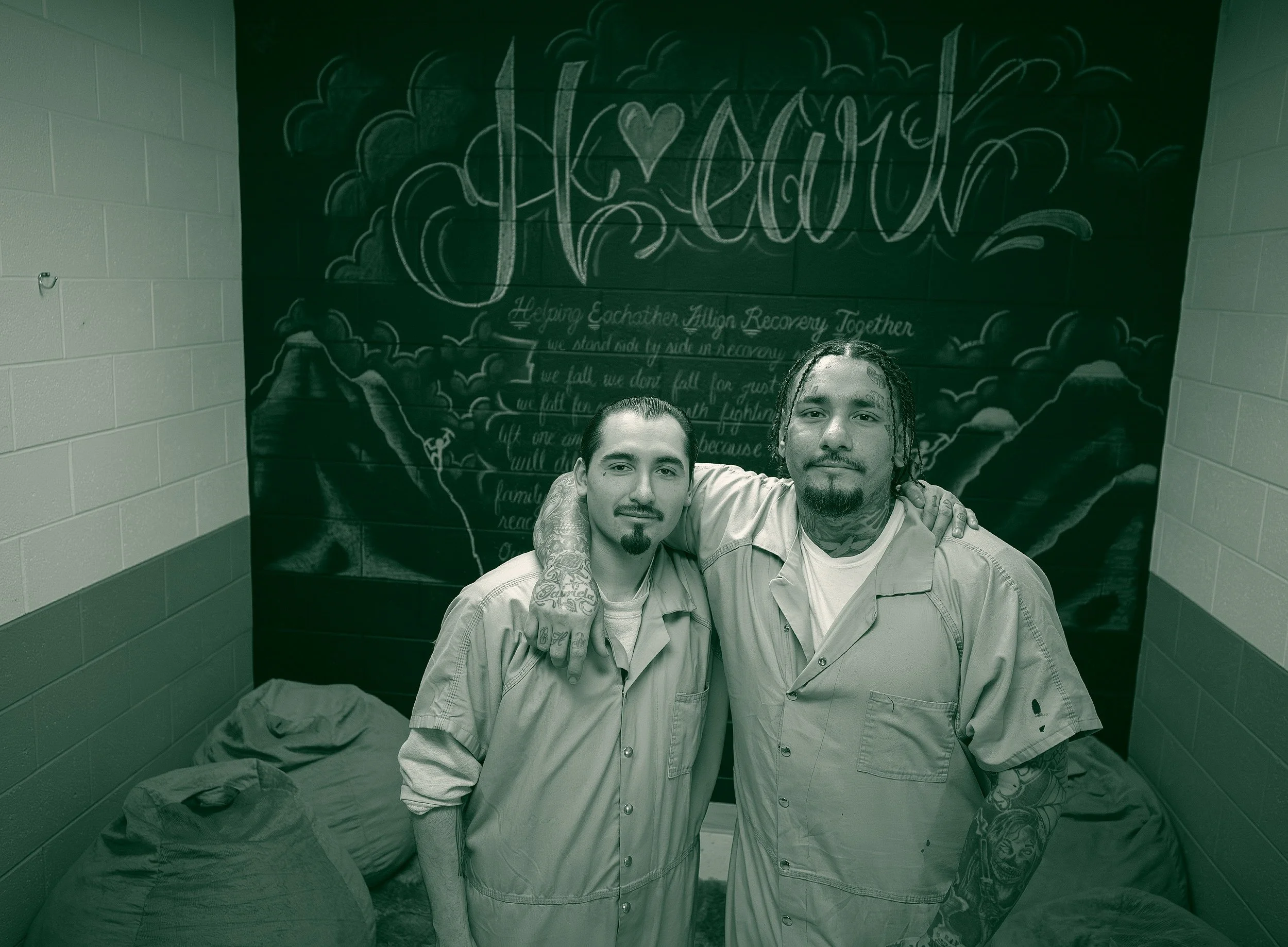
A regional jail and its community services board keep people on their opioid use disorder medication when they are booked into custody, then add clinical assessment, counseling, case management, peer support, and groups, with in-jail medication starting next.
The Challenge They Were Addressing
For a decade, the Northwestern Regional Adult Detention Center ran cognitive learning classes, education, and a full slate of services inside the building. People arrived in poor health, stabilized in custody, and left in far better shape than they came in. Then, jail leadership kept reading the same names in the newspaper. People who had done well inside were dying of overdoses in the community after release.
Medication for opioid use disorder was not part of the jail's toolkit at that point. Leadership first heard the case for it at a state behavioral health meeting shortly after the current superintendent took the role in 2021, and started asking practical questions: what does the Americans with Disabilities Act require of us, what keeps the agency out of litigation, what reduces liability, and, above all, what actually helps people. The answers pointed in the same direction. Continuing medication in custody was both legally sound and clinically sound.
The staff's view of medication had to change alongside the policy. Correctional and medical staff had years of practice keeping controlled substances out of the building, and the only medication experience many had was with pregnant women who continued on methadone. Clinical partners at Northwestern Community Services Board had wanted a jail program for years, including one clinician who had carried the idea for a decade after losing someone who could not get medication behind bars. What was missing was leadership willing to build it, and a design that fit this jail, this staff, and this budget.
What They Built
HEART launched in January 2025 as a joint operation between NRADC and the Northwestern Community Services Board. The program currently runs at what the team calls "Tier 2." Anyone booked into the jail who is already enrolled in a community-based treatment program continues their medication in custody without interruption. Medications include buprenorphine and methadone for people who enter on it, including pregnant women. Long-acting injections are being added.
The operational sequence is short and deliberate. The HEART operational supervisor, a sergeant assigned to the program, tracks who is coming in and who is already connected to treatment, then notifies the clinical supervisor. The clinical supervisor completes an assessment and diagnosis and starts the person on therapy or substance use counseling based on need. The two certified substance abuse counselors provide counseling and case management. The peer recovery specialist begins meeting with the participant. Everyone in HEART receives some combination of therapy or counseling, case management, peer services, and groups.
Scheduling is built so that no week is empty. Participants are seen twice a month by their therapist or counselor. In alternating weeks, they are seen by the peer specialist, so every participant has a service contact each week. Months with a fifth week become enrichment weeks: guided meditation, painting and art projects, and an addiction jeopardy game that participants ask for by name. Group offerings include Seeking Safety, counselor-facilitated and peer-facilitated groups, and adult children of alcoholics and codependency groups that are restarting.
Most men in the program are housed together in a single unit with a target capacity of 25 beds, currently holding about 23 participants. Consolidating the men into one unit reduced medication diversion because others no longer pressured participants in the general population. The 10 women in the program remain in a general population pod for now because the numbers are smaller. Most programming happens inside the pod, with some movement through the facility. The team has decorated therapy spaces in both the main jail and community corrections, so the rooms feel warm rather than institutional. The next step is set for October 1, when in-jail medication starts and people not already on medication can be assessed and, if appropriate and wanted, begin treatment inside.
Key Program Components
Who You Need at the Table
What made a willing partner essential vs. optional?
The required partners are the ones without whom medication stops at the jail door. The detention center controls access, housing, movement, and medication administration. The community services board holds the clinical license, the counselors, the peer specialist, and the community program a person was enrolled in before arrest and will return to at release. Neither side can run this model alone, and the settlement funding is what pays for the community side to work inside the building.
What made the partnership work was each organization learning the other's operating reality. The behavioral health team arrived ready to deliver a full-service array and had to understand why the jail wanted to start narrower: security constraints, staff movement, count times, and the pace at which a correctional culture can absorb change. The jail, in turn, had to understand what clinical care actually requires in terms of space, privacy, and time. Helpful partners, including recovery housing and community reentry providers, extend the model past release, but are not needed to start.
Budget Breakdown
What is the minimum viable budget to replicate this?
The model consists of one clinical position and one peer position, with a jail willing to house them. A single licensed clinician who can assess, diagnose, and deliver counseling, paired with one peer recovery specialist and a designated jail staff member who handles scheduling and movement, can continue medication for people booked in on it and hold weekly contact with each participant. Medication continuation itself is a modest cost compared with staffing. A county starting near $75,000 should buy staff time inside the building first, run a small cohort of participants it can safely manage, and add groups, housing support, and in-jail medication starts only as capacity and funding allow.
What Worked and Why
Specific decisions or design features that drove success
Designing for local conditions, rather than copying another jail, shaped everything that followed. The program is built around the realities of the local jail and the four communities it serves, not the resources of larger neighboring jurisdictions with different staffing and service needs. Leadership focused on what NRADC and NWCSB could actually implement and sustain on their own.
The program began with Tier 1, a small pilot of 12 clients, a deliberate capacity decision designed to protect quality. Rather than immediately initiating medication-assisted treatment for everyone entering the facility, the program initially served only individuals connected to community treatment within the catchment area. Then, Tier 2 expanded services to include medication continuation for all eligible individuals. That gave the team room to build the clinical, operational, and scheduling infrastructure that broader access would require. The program has set a firm October 1, 2026, date to begin Tier 3, which will add MAT induction to the services available within the facility. The team calls this phased approach "going slow to go fast."
Housing the men in the program together in one unit changed the operating environment. Medication diversion dropped once people outside the program no longer pressured participants, and the pod itself became the primary treatment space. That also cut movement demands on security staff. The team is working toward a similar arrangement for women as enrollment grows.
Placing clinical staff on the jail's own payroll and inside the building removed the friction of a visiting-provider model. The clinical supervisor moved from seven years at the community services board into a full-time position on the jail's payroll, covering HEART and the wider facility. Counselors and the peer specialist maintain set schedules that the operational supervisor manages alongside jail movement, so sessions happen on time rather than being canceled due to logistics.
Culture work ran alongside the clinical work, and the team treated it as core to the program rather than something bolted on afterward. The HEART team met with the security day shift and night shift teams to explain what they do and take questions, including skeptical ones. Leadership made the case in operational terms: fewer fights over medication, a jail population down by roughly 80 to 90 people, and a cost per participant that the agency can defend. Staff who were unconvinced at the start are now asking to join the work, and one employee who was formerly incarcerated at the facility is now part of the team.
Early outcomes and data
The program launched in January 2025 and is fully operational at Tier 2, medication continuation, with in-jail medication starts targeted for October 1.
About 23 men are currently in the dedicated HEART housing unit against a 25-bed target, plus 10 women participating from the general population. Participants in the program can also be housed in working pods as they advance through programs.
The original first-year projection was 30 to 35 participants; actual service volume now stands at 37 in HEART and 20 on methadone.
Observed a decline in medication diversion in the male HEART unit after participants were consolidated into one pod.
Jail population reported down by approximately 80 to 90 people; leadership associates this with the program, though causality has not been formally tested.
Former participants who stayed in therapy and case management after release have returned to speak with people currently inside; several have completed peer training.
The program was featured in a documentary produced with the Virginia Opioid Abatement Authority, which included interviews with current and former participants.
Formal outcome and recidivism reporting is planned as a later program tier; data systems are still being built.
Lessons Learned
Ask for the full scope of funding up front. What the program needed at release, community connection, housing, transportation, and aftercare, became clear only after participants started leaving. The team is now folding those pieces into operations and writing the rest into future requests.
Go slow to go fast. Starting with medication continuation for a defined group, rather than the whole model, lets the team build assessment, scheduling, and group structures that now support much faster expansion of in-jail medication starts.
Culture change is program work, not a side project. Meeting with every shift, explaining what the clinical team does, and answering skeptical questions directly moved the agency further than any policy memo. Staff who doubted the model at launch now ask to be part of it.
Space matters more than expected. The jail let the clinical team create therapy rooms that feel warm rather than institutional, in both the main jail and community corrections. The cost was small, and participants engaged differently there.
Keep the door open after release. Participants who stayed in therapy and case management after release return to speak with people still inside, and some have completed peer training.
Sgt. Jessica Mohr
Rebekah Jarrell (peer)