Bmore POWER: Peer Street Outreach at 12 Weekly Neighborhood Sites
A Direct-Allocation Model for Overdose Prevention and Rapid Cluster Response
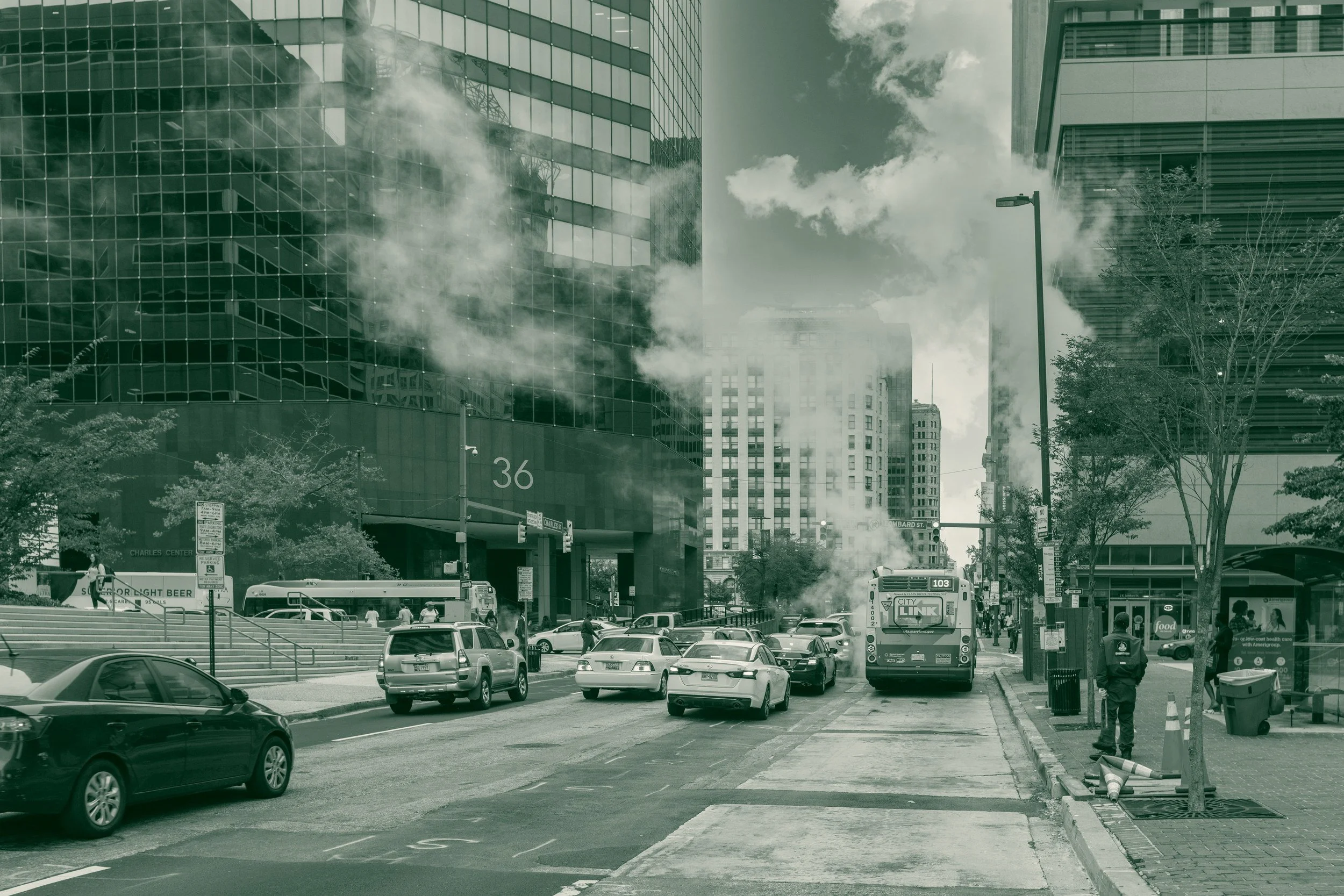
Bmore POWER™ is Behavioral Health System Baltimore, Inc.’s (BHSB) street-based overdose prevention team, staffed entirely by people with lived and living experience with drug use, that runs 12 weekly outreach sites, distributes naloxone, links residents to substance use services and community resources, and dispatches outreach when overdose clusters appear in Baltimore City neighborhoods.
The Challenge They Were Addressing
Baltimore City has one of the highest overdose burdens of any American city, and the residents most at risk of dying are among those least likely to walk into a brick-and-mortar clinic. Overdose prevention services, including current information about the drug supply, had to reach people where they already spent their days. That meant showing up on the corner, outside the store, and near the transit stop where residents already gathered. Behavioral Health System Baltimore, Inc., the city's Local Behavioral Health Authority, understood that a clinic-based referral pathway alone would leave the highest-need residents unreached.
When the city negotiated its opioid settlement agreements, it took an unusual approach. Rather than solely creating a single competitive pool that any organization could apply to, the City also named 22 specific entities in the settlement agreements themselves and directed portions of the funding straight to them. Each named entity had a track record of doing work aligned with the funding's intent. Bmore POWER was one of the three BHSB programs to receive a direct allocation.
For Bmore POWER, which had been operating on a mix of grants for a decade, the settlement award was an opportunity to expand its working model. The team knew the neighborhoods and was staffed by people from those neighborhoods. What the team needed was more outreach hours, more supplies, more capacity to respond in near real time when the drug supply shifted, and more support for a workforce whose primary qualification is living and lived experience.
What They Built
Bmore POWER operates 12 weekly proactive outreach sites across Baltimore, running Sunday through Saturday, with over 100 hours of outreach each week. Each site runs a three-hour shift, typically 9:00 a.m. to noon or 1:00 p.m. to 4:00 p.m., in a neighborhood where the team has built long-standing relationships. The team distributes overdose prevention supplies and connects residents to treatment, recovery, and other community resources when indicated.
Every full-time staff member goes to outreach, including the Director and Associate Director. Tuesdays begin with office supply packing, a Site Leaders meeting, an all team members’ meeting, and Site Leader pick up of their week’s supplies. Supplies are also packed and picked up by Site Leaders on Fridays. Throughout the week, Site Leaders and Coordinators arrive at each site 10 to 30 minutes early to set up, and run the shift with three to five outreach workers. Coordinators and the Outreach Coach rotate as supervisors on duty, providing on-site support and making the call when weather or safety requires the team to relocate or shut down for the day.
The opioid restitution fund award added a second operational mode: reactive outreach. Proactive outreach is scheduled and predictable, in the same place at the same time each week. Reactive outreach is dispatched when localized overdose spikes or drug supply shifts appear, sometimes in neighborhoods where Bmore POWER has not previously worked. The team monitors data feeds from the Baltimore City Health Department, listens for community reports, and applies dispatch criteria to decide when to send a team in near real time. Because reactive outreach can land the team in unfamiliar territory, staff refresh the introduction skills the team relied on when Bmore POWER was first formed, restating who they are, why they are there, and what they can offer.
The third layer of the project is workforce development for staff with lived and living experience. Two Training Coordinators sit on the team full-time, join the Tuesday all team members’ meeting, participate in outreach, and provide the current information the team needs on additives in the drug supply, changing local trends, and evolving practice. That training capacity extends beyond Bmore POWER: BHSB shares the training with the other opioid restitution fund grantees in the City, so more than 30 organizations doing similar outreach do not each have to buy their own.
Key Program Components
Who You Need at the Table
What made a willing partner essential vs. optional?
A required partner is one whose absence would either stop the work or make it far less effective. In Baltimore, the Health Department is the required partner because its data feeds tell Bmore POWER where to send the reactive outreach team and what to warn residents about, and because its historical community liaison work built the neighborhood trust Bmore POWER now operates within. The Mayor's Office of Overdose Response convenes opioid restitution fund grantees and holds the reporting structure that keeps the settlement funds accountable. Trusted community-based partners are required for warm hand-offs, so a resident asking for a service Bmore POWER does not provide is not left without a connection to help.
Helpful partners expand reach and add specificity, but are not day-to-day operational. Data from HIDTA, for example, is useful when it comes, but too infrequent and too narrow to build the model on. The training-sharing relationship with other City grantees is a helpful multiplier that keeps 30-plus organizations aligned on current practice without each having to build a training program from scratch.
Budget Breakdown
What is the minimum viable budget to replicate this?
The floor for a smaller jurisdiction is one dedicated coordinator plus a small team of paid peer outreach workers, a supply of naloxone, a working data connection with the local health department, and one or two anchor community partners willing to accept warm hand-offs. A rural county with around $75,000 could run a scaled version. That version would include one or two paid peers, a weekly outreach site in the neighborhood with the highest need, and a formal referral relationship with the local treatment provider and recovery community center. The essential investment is peer staffing, reliable supplies, and time in the community. Scale can grow later.
What Worked and Why
Specific decisions or design features that drove success
The critical component of this model is a team drawn from the neighborhoods where outreach happens. Team members describe clocking in and continuing the work they were already doing before they had a Bmore POWER uniform. That work includes handing out naloxone, checking on neighbors, and answering questions. The team does not have to fight to make community connections because the team already is the community. Health departments and outside agencies routinely struggle with that step; Bmore POWER does not.
The workforce policy that makes peer staffing sustainable centers on the staff member's ability to do the job on a given day. BHSB approaches substance use disorder the same way it would any other protected health condition. What matters at work is whether a staff member can show up safely and effectively that day. That posture is backed by generous PTO, flexible scheduling, and multiple part-time options at 11, 19, and 40 hours a week, so a staff member can hold the position that fits their life at a given moment and remain eligible to move into more hours when they are ready.
A second design decision was to add reactive outreach as a distinct operational mode without changing the foundation. Proactive outreach retains the scheduled, relationship-based rhythm that built trust over a decade. Reactive outreach adds rapid-response capacity when data or the community signals that a neighborhood needs help now. Separating the two modes protects the long-standing relationships in proactive sites while making the team responsive to acute risk.
A third choice was to share training with the other 30-plus opioid restitution fund grantees in the city, multiplying the settlement funds' impact and keeping practice aligned across the response. Instead of every grantee building in-house training capacity, BHSB provides a shared body of training content that the whole cohort can draw on. The result is a more consistent standard of care across Baltimore and a more efficient use of the settlement dollars.
Direct naming in the settlement agreement gave Bmore POWER the opportunity to plan a three-year program. The tiered allocation, smaller in Year 1 and larger in Years 2 and 3, matches the natural pace of hiring, training, and building infrastructure. A traditional grant cycle would have pushed the team to spend fast and prove impact quickly. The direct-allocation approach let the work grow at the pace it needed.
Early outcomes and data
12 weekly proactive outreach sites operating Sunday through Saturday, with over 100 hours of outreach each week.
Reactive outreach protocol established, including data-sharing agreements with the Baltimore City Health Department for cluster alerts and drug supply information.
Team expanded from 16 to 24 total staff, with 11 positions supported by the opioid restitution fund grant.
Two dedicated Training Coordinator positions are embedded on the team, delivering internal workforce development and shared training to more than 30 City grantees.
Reach and encounter numbers are tracked and reported monthly and quarterly to the City, and summarized annually in BHSB's public impact report.
Warm-handoff pathways are in place with community partners, including Charm City Care Connection, local substance use services providers, and neighborhood recovery centers.
Lessons Learned
Peer staffing must be paired with an appropriate workforce policy. Hiring people with living and lived experience is only the first step. The policies on scheduling, PTO, supervision, and definitions of workplace fitness must be designed for the workforce being hired. Approaching substance use disorder the way an employer approaches any other protected health condition is both the legal standard and the sustainable one.
Direct allocation of settlement funds can outperform open competition. Naming entities in the settlement agreement and directing funds to teams already doing the work moved money to programs faster, reduced the risk of misuse, and let recipients plan multi-year programs at a realistic pace. Cities and states negotiating settlements should consider whether direct allocation to proven teams is the right instrument alongside competitive rounds.
Shared training capacity multiplies impact across a grantee cohort. Building one strong training institute inside a lead agency and opening it to every grantee in the city produced a common practice standard, reduced duplicative spending, and created a natural coordinating body among organizations doing overlapping work.
Reactive outreach is a distinct discipline. Reacting to a cluster requires different introductory skills, different safety protocols, and different dispatch decisions than running a scheduled site every week. A team that assumes the two modes are interchangeable will underperform on both.
The story is in the relationships, but the funding case is in the numbers. Monthly and quarterly reporting to the city on outputs, encounters, and supplies distributed is a non-negotiable, and BHSB tracks it carefully. The narrative that persuades a new jurisdiction to try the model, though, lives in the neighborhood-by-neighborhood relationships the team has built. Plan to tell both stories.