Fort Lyon: Statewide Recovery Housing on a Former Army Post and VA Campus
A Peer-Led, Two-Year Model for Coloradans Experiencing Homelessness
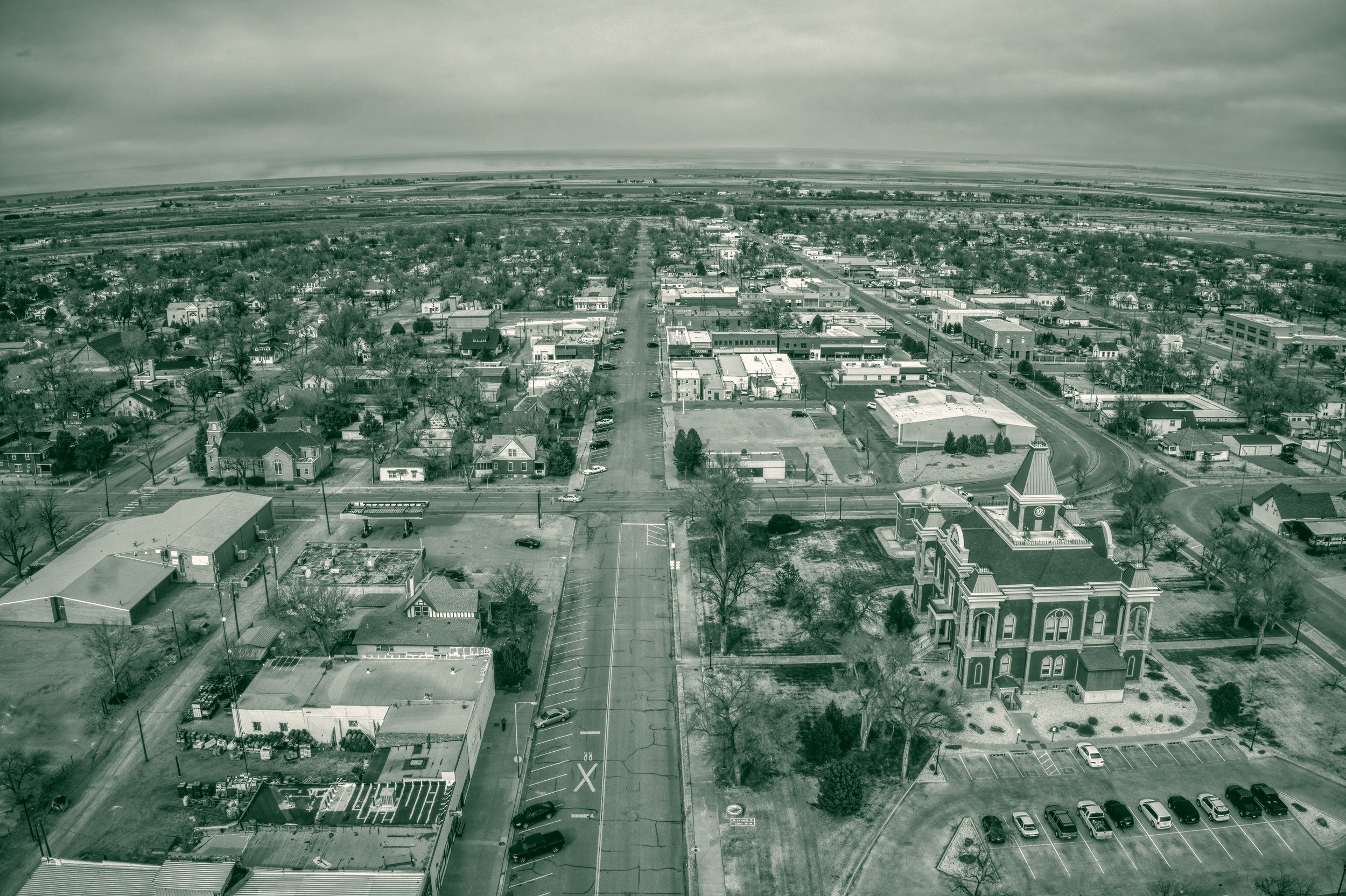
In partnership with the Colorado Coalition for the Homeless, this award supports staffing and infrastructure improvements at Fort Lyon, a two-year residential recovery community in southeast Colorado offering peer support, case management, vocational training, and behavioral health services for people across the state affected by opioid use disorder and housing instability.
The Challenge They Were Addressing
Before The Fort opened in 2013, Coloradans who were unhoused and living with substance use disorder had few realistic options for stable, non-clinical residential recovery. Emergency shelters, short detox stays, and 30-day inpatient programs cycled people back to the street with no time to rebuild identity documents, income, or housing. The state was carrying the downstream cost of that cycle in emergency room visits, jail beds, and shelter capacity, at roughly $35,000 per unhoused person per year.
The former Fort Lyon site, a 552-acre campus in southeast Colorado that had served as an Army post, a VA hospital, and a prison, had been sitting largely idle. In 2013, the Colorado Coalition for the Homeless converted the campus into a 246-bed residential recovery community for people with substance use disorders who were at risk of or experiencing homelessness. The model was low-barrier, non-clinical, and peer-led, and it allowed residents to stay for up to two years, long enough to rebuild.
In 2025, the opioid settlement award added three new full-time positions, food-cost offsets, personal-supply purchases, and beds for graduating residents to that model. The award added capacity to an existing case management team. As the program director put it, with this population, "I don't think you can have enough case management."
What They Built
The Fort is a two-year, 246-bed residential recovery community on a 552-acre campus in southeast Colorado. Residents come from anywhere in the state, provided they have been Colorado residents for at least six months, and they generally enter through a referral source rather than as walk-ins. The six-month residency requirement also helps ensure that residents qualify for Colorado Medicaid. Applications can be completed online or on paper, and every applicant clears a background check. The program does not accept registered sex offenders, individuals with a pattern of recent violent crimes, people with high-acuity medical needs who cannot complete their own daily living tasks, or people whose mental health is not currently stable on medication. Everyone else is welcome.
Once on campus, residents live in a zero-tolerance community for drugs and alcohol, a policy chosen by residents themselves early in the program's history to maintain the community's integrity. Staff use random and for-cause urinalysis, plus urinalysis and breathalyzer checks when residents return from a pass. The program director describes the program as nonpunitive. Residents who experience a return to use are supported into treatment and, on completion, are eligible to return to campus with an updated case plan. That response replaced an earlier policy that discharged residents immediately after a relapse and allowed them to reapply after 60 days, a window the program director calls "the death zone" for people who had just lost both sobriety and housing.
Programming runs nearly 24 hours a day and is entirely opt-in. Residents can attend 15 recovery, health, and wellness meetings a day or none. They must attend one mandatory community meeting and one mandatory floor meeting each week, and they must take prescribed medications as directed or follow a documented disposal protocol with the clinic. Everything else is theirs to shape. Three meals a day, medical and behavioral health services from an on-site clinic, an on-campus high school diploma program, partnerships with a local college for classes and trade programs, pre-employment work modules with a small stipend, and shuttle service to work and school are all available on campus.
The two-year opioid settlement award funded three full-time positions that extend that model. The case manager and the benefits specialist work alongside the existing case management team, with the benefits specialist helping residents obtain IDs, driver's licenses, birth certificates, Medicaid, SSDI, and VA benefits and arranging long-term care placements. The overnight safety staff member observes and reports, responds to alarms, and maintains a physical presence that, in the program director's words, makes residents feel safe. The award also offset roughly $140,000 in food costs, purchased personal-care supplies and linens, and funded beds that will go home with graduating residents as they move into permanent housing.
Key Program Components
Who You Need at the Table
What made a willing partner essential vs. optional?
The distinguishing feature of a required partner is a funding relationship or a service that the program cannot provide in-house. DOLA carries the operating base through the state Long Bill, which makes the underlying model financially viable. The regional opioid settlement coalition administers the settlement dollars that funded the three new positions and the food, supply, and infrastructure work. Local behavioral health providers and statewide treatment facilities extend the clinical continuum that a non-clinical residential community cannot deliver on its own.
Helpful partners expand reach without being essential to day-one operations. Community colleges, the local health department, and mobile dentistry all add services that residents value, and The Fort could operate without any single one of them. Local officials are a required partner at the siting stage and again during any expansion, when community relationships and stigma mitigation cannot wait. Amanda Johnson, the program director, held a town hall five weeks into her tenure to address misinformation and repair the community relationship, and that work continues.
Budget Breakdown
What is the minimum viable budget to replicate this?
The Fort spends roughly $17,000 per resident per year, well below the approximately $35,000 the state spends to keep an unhoused person safe through shelters, emergency rooms, and other public services. A rural county building a smaller version should expect residential operating costs to be the main constraint. Settlement dollars are best used, as they were here, to add the roles that make a residential model work, including benefits navigation, case management, and overnight safety.
Roughly $140,000 of the award offset rising food costs. Without that offset, rising costs would have put the three-meals-a-day baseline at risk. Food, personal supplies, and graduation beds look small in a budget, and residents use them every day.
What Worked and Why
Specific decisions or design features that drove success
Hiring staff with living and lived experience of recovery shaped the rest of the program. 13 of the 53 staff are in recovery, and 10 are Fort Lyon graduates. The program director's goal is for the next four hires to also be graduates or people in recovery. That hiring builds credibility with residents from the start and creates a visible pathway from resident to graduate to staff member.
Resident autonomy within a structured community drives buy-in. Residents can attend 15 recovery meetings a day or none at all. Two meetings per week are mandatory, medication management follows a clear protocol, and residency requires abstinence. The program director, who went through a 30-day inpatient program herself, contrasts this with programs that dictate wake times, meals, and groups. Many residents have experienced a loss of control throughout their lives, and she credits control over their own recovery for their buy-in.
Replacing the 60-day discharge policy with a treatment-first return-to-use protocol removed a period of acute risk. Under the earlier policy, a resident who relapsed was discharged immediately and could reapply after 60 days. In practice, people who had just lost both sobriety and housing were on their own during that 60-day window, and some did not return. The new protocol supports residents into treatment and, on completion, back to campus with an updated case plan. Residents with a brief return to use after long sobriety often do not meet ASAM criteria for a 14- or 30-day program, so the protocol also allows a return from detox with added expectations in the case plan. The program director describes the results as very successful.
Adding a full-time benefits specialist to the case management team addressed a barrier that residents arrive with. Residents arrive without IDs, driver's licenses, birth certificates, Medicaid enrollment, or Social Security cards. Every one of those documents is a barrier to permanent housing, employment, and long-term care placement. The specialist has also built relationships with several long-term care facilities, so aging residents can move to a setting that fits their stage of life.
Community relationship-building has continued throughout the program's 13-year history. The initial siting was contentious, and community engagement remains a standing part of the program director's job. Replicators should expect community pushback. Dedicated time and honest engagement carried The Fort through it.
Early outcomes and data
The Fort served 464 unique residents in 2025 against a 246-bed capacity.
The Fort spends approximately $17,000 per resident annually, compared with approximately $35,000 statewide to keep an unhoused person safe.
13 of 53 staff are in recovery, and 10 are Fort Lyon graduates.
The settlement award offset roughly $140,000 in food costs, protecting the three-meals-a-day baseline.
The settlement award funded three new full-time positions for a case manager, a benefits specialist, and overnight safety staff.
A treatment-first return-to-use protocol is operational and has replaced an earlier 60-day discharge policy.
The Coalition secured a Round 4 opioid settlement infrastructure award of $492,000 for door replacement, entrance and parking-lot lighting, replacement of roughly 160 heating and cooling units in residential housing, new gym equipment, and conversion of the tennis courts to pickleball courts.
Lessons Learned
Expect a gap of several months between award notification and available cash. The intent-to-award letter arrived in mid-May 2025, and cash did not begin flowing until September or October. Grantees may spend from the award-letter date only if they can front the costs from other sources, and the grant end date does not move. Funded positions cannot be hired until cash arrives. Bridge funding should be in place before the award is accepted.
Settlement dollars are well suited to wraparound roles. The award's three full-time positions (case manager, benefits specialist, and overnight safety) extended case management, benefits work, and overnight coverage across a 246-bed community. The benefits specialist's long-term care relationships gave aging residents a placement option suited to their needs.
The Fort costs the state less than homelessness does. The Fort spends $17,000 per resident per year, compared with an estimated $35,000 per year to keep an unhoused person safe through emergency rooms, shelters, and other public services.
Autonomy plus a small set of non-negotiables is the operating principle. Two mandatory meetings a week, a documented medication-management protocol, and a zero-tolerance policy chosen by residents are the entire fixed structure. The resident chooses everything else. The program director credits that balance for resident buy-in.
Staff without living or lived experience bring value too. The program director reminds residents that staff with education backgrounds, though they have not lived what residents have, bring knowledge residents can learn from. She identifies staying curious and open-minded as the disposition that makes that exchange work.