Membership Recovery Café Where Every Employee Is a Peer
A Community Model That Grew From One Café to Five Kentucky Counties
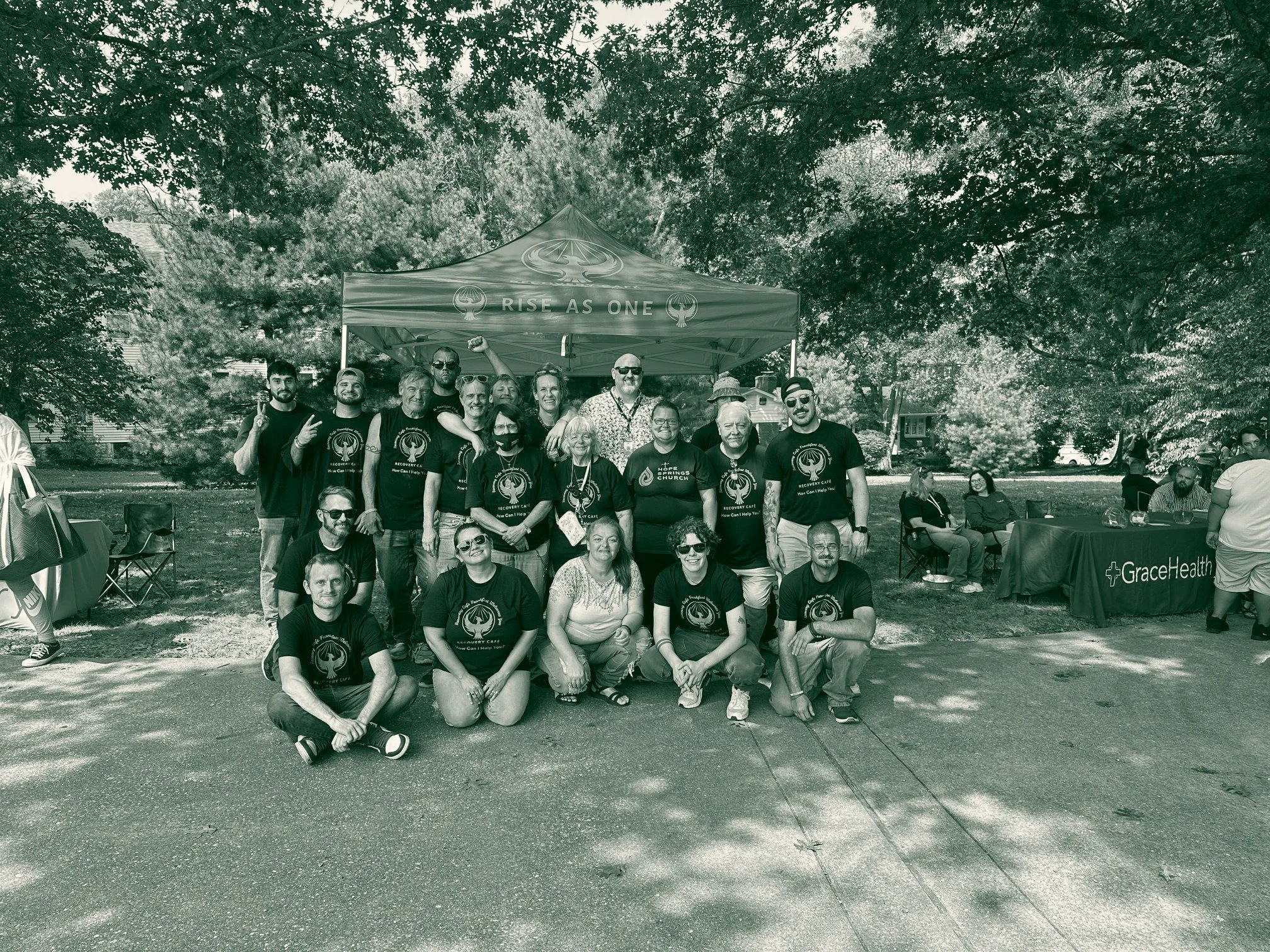
Recovery Café Lexington provides a peer-led community for people recovering from substance use disorder, mental health challenges, homelessness, and justice involvement. With support from Kentucky opioid abatement funds, the program expanded from four to seven days a week and opened additional locations across five counties, reaching 10,166 individuals since 2024.
The Challenge They Were Addressing
Traditional treatment and drop-in services in Kentucky supported people during periods of acute need but often provided limited opportunities for ongoing connection. People leaving treatment or jail, or beginning medication-assisted recovery, could find themselves working through recovery without consistent community support. While Lexington had recovery meetings and clinical providers, it lacked a dedicated daily space where people could build peer relationships, share meals, strengthen their recovery, and develop a sense of belonging.
The Recovery Café model was created to provide the ongoing support and connection that help sustain recovery. Recovery Café Lexington opened in 2020 with 50 members and about 15 participants each day. Its founders had seen people cycle through treatment and other systems, only to return to circumstances that made long-term stability difficult. The Café offered a different approach: a consistent, supportive community where people could build meaningful relationships, strengthen their well-being, and maintain their recovery.
The choice of the Recovery Café model was deliberate. The model was founded in Seattle in 2004 and has grown into a network of nearly 100 Cafés across North America, with a defined membership structure, guiding principles, and small-group recovery circles that have been tested and refined over two decades. Lexington did not need to invent a program; it needed to install a working peer-led community model in a state that was building out its opioid response.
What They Built
Recovery Café Lexington is a peer-led, peer-run community center where every employee and board member is a person in recovery from substance use disorder, mental health challenges, homelessness, incarceration, or a combination of those experiences. Participants are known as members and are welcomed into a space designed for connection and support. Each day, members have access to a hot meal, coffee and breakfast, computers, resources, and, most importantly, peers who understand their experiences and support their recovery.
The Recovery Café model centers on connection, reflection, and personal growth. Members share meals, begin with moments of silence, and participate in weekly recovery circles of 12 or fewer people. In these small groups, members discuss challenges, progress, and goals while receiving support from peers. School for Recovery complements these activities with classes that build confidence and practical skills, ranging from pottery and cooking to food safety certification and basic car maintenance.
Membership is voluntary and built around shared commitments. Members agree to remain drug- and alcohol-free while at the Café, to participate in a weekly recovery circle, to contribute to the community, and to follow six guiding principles. The Café welcomes all pathways to recovery, including twelve-step, faith-based, and clinical approaches, and continues to support members who experience a return to use.
Kentucky opioid abatement funding, first awarded in 2024, allowed Recovery Café Lexington to expand from four to seven days a week. The funding also supported the opening of Recovery Café Frankfort in 2025, as well as additional sites in Shelby, Boyle, and Jefferson counties, a Fayette County high school, and the Fayette County Detention Center in 2026. The Recovery Café Network database tracks membership, services, meals, and recovery circle participation, providing reliable data for grant reporting and program management.
Key Program Components
Who You Need at the Table
What made a willing partner essential vs. optional?
The distinguishing feature of a required partner is a durable operational tie: someone who pays for the work, someone who supplies the model, someone who moves people into or out of the Café, or someone whose facility the Café operates inside. The Kentucky Opioid Abatement Advisory Commission and the SAMHSA state pass-through funder underwrite the daily operation. The Recovery Café Network provides both the model itself and the data platform that enables reporting. Local treatment providers and the county detention center provide the referral pathways and the physical space that enable the Café to meet members where they already are.
Helpful partners deepen the offer without being load-bearing on day one. The University of Kentucky pharmacy students, AmeriCorps Recovery Corps navigators, private foundations, and city grants all extend the Café's reach, sharpen its educational programming, and diversify its funding. A Café launching in a new county could open without any one of these partners, then layer them in over the first two years as the operation stabilizes.
Budget Breakdown
What is the minimum viable budget to replicate this?
A replicating community can open a Recovery Café on a first-year budget in the $150,000 to $300,000 range if it can secure a low-cost or donated space, has a lead who will manage the Café initially, and can staff a small peer team of two to three people. At a minimum, the model requires a paid executive director or manager, at least one paid peer coordinator, and sufficient operating funds to provide a daily meal and weekly recovery circles. Membership in the Recovery Café Network and access to the Agency database are essential from the start. Additional services, from School for Recovery classes to satellite locations, can be added as membership and resources grow.
What Worked and Why
Specific decisions or design features that drove success
By adopting an established model, the Café was able to launch more quickly. The Recovery Café Network provided the membership structure, the recovery circle format, the guiding principles, the Agency database, and a network of peer Cafés for consultation. Lexington did not have to create a new model. Instead, it focused on putting the proven approach into practice, hiring peers, and adapting it to the needs of Kentucky communities.
Peer staffing is central to the Café's culture. Every staff member brings living and lived experience that helps them relate to members and understand the challenges of recovery. From check-in and recovery circles to follow-up after an absence, peer connection is built into every part of the experience. This shared understanding helps build trust, strengthen relationships, and create a strong sense of community.
Paying peer staff a living wage has strengthened retention. The Café's lowest full-time recovery coach salary is approximately $40,000, compared with the $10-$12 per hour often paid for similar peer roles. Competitive wages provide greater financial stability for staff and help the Café attract and retain experienced peer professionals.
An internal member-to-leader pathway sustained the staffing model. Recovery circle facilitators watch for members who show empathy and skill in giving feedback and invite them to circle-leader training. From there, some members become recovery coaches, managers, and coordinators. Two of the current managers and coaches started as members; the volunteer and program coordinator started as a volunteer. The AmeriCorps Recovery Corps partnership formalizes this pipeline at a marginal cost of roughly $10,000 per full-time-equivalent position.
Each opioid abatement application named a new capability the Café would build, which kept the Café fundable across multiple cycles. The four awards to date have paid for expanded hours, the Frankfort Café, satellite sites, jail-based programming, and direct financial assistance for members. Naming a specific new capability in each round gave reviewers a concrete decision, which reads more favorably than a general request to continue what is already funded.
Early outcomes and data
10,166 unduplicated Kentuckians reached since 2024, up from 50 unduplicated members and a daily census of 15 at Café opening.
Daily census grew from approximately 15 to more than 100 across program locations.
Café hours expanded from four to seven days per week following the first opioid abatement award.
Total entries approximately doubled from 9,000 to 12,000 in the first year of opioid abatement funding.
Outreach events grew from 11 to 29 per year; outreach contacts grew from 600 to 2,800.
Units of service grew from approximately 2,000 to 5,500.
Full second Café opened in Frankfort in 2025.
Satellite programming launched in Shelby, Boyle, and Jefferson counties, a Fayette County high school, and the Fayette County Detention Center in 2026.
Two deaf recovery coaches hired; ASL-interpreted recovery circles offered in Lexington and Frankfort.
Café invited to present as a plenary at the Kentucky Opioid Abatement Symposium in October 2026.
Lessons Learned
Peer staffing is the product. Every hire, every promotion, and every wage decision should reinforce that peers run the Café. Members read peer identity in the first conversation, and the model is reproducible only when other counties hold that line.
Apply for opioid abatement funds with a specific new capability each round. The Kentucky commission has funded four rounds because each application proposed a new site, population, or service. Reviewers can support something concrete more easily than a general request to continue what is already funded.
Invest in the data platform from day one. The Recovery Café Network's Agency database tracks members, services, and retention data for grant reporting and program management. Having this system in place from the start helps ensure accurate reporting and avoids the challenge of reconstructing data later.
Braid funding before the first crisis. Diversifying funding helps protect the Café from disruptions if one source is delayed or unavailable. Combining opioid abatement funds with federal, local, and private funding creates greater financial stability and supports long-term sustainability.
Build the internal leadership pathway deliberately. Recovery circle facilitators are the scouts for future staff. Identifying member leaders, offering circle-leader training, and then hiring from within turns membership into staffing and gives the Café a workforce that shares its culture.
Design accessibility into the operation early. ASL interpreters, deaf recovery coaches, and interpreted recovery circles opened the Café to a population that most recovery spaces miss. Building this in from the start costs less than retrofitting it later.