The Recovery Den: Rural Walk-In Center
A Peer-Led Recovery Hub for a Rural County
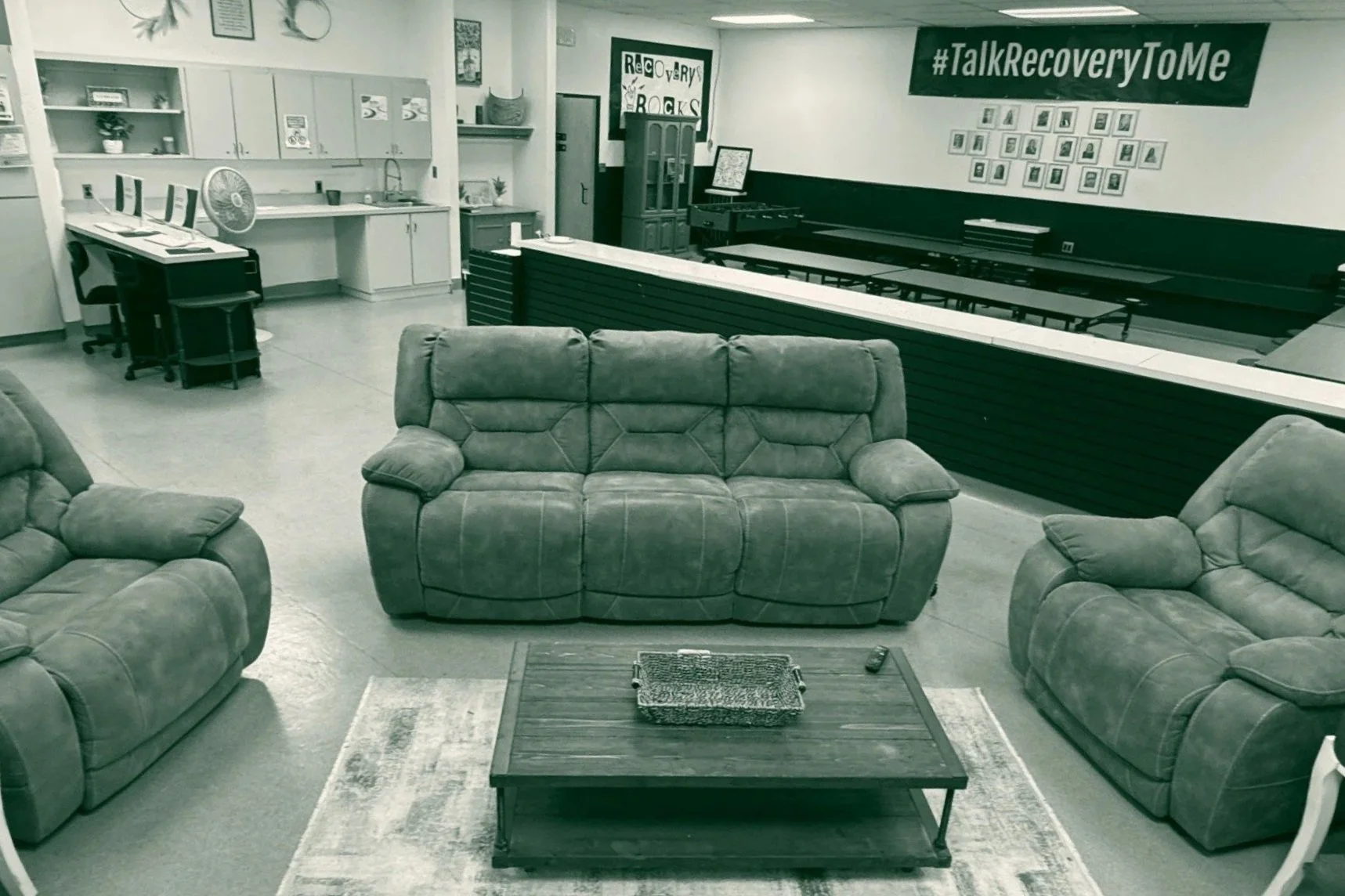
The Recovery Den is a walk-in recovery community center in rural Walker County, Alabama, where peer mentors with lived experience meet people the moment they walk through the door, connect them to assessments, treatment, transportation, recovery support groups, and stay with them long after the first visit, serving roughly 921 unique individuals across 2,498 service visits in 2025.
The Challenge They Were Addressing
Since 2016, Walker County has consistently ranked among Alabama's top five counties for opioid overdose deaths. The county has also experienced one of the highest overdose death rates in the state and has been recognized nationally for the severity of its overdose burden, while the local recovery infrastructure struggled to keep pace with the growing need for coordinated services. The county had one outpatient treatment center and a single provider that performed the ASAM assessments required to enter state-certified treatment. Wait times for those assessments ranged from 2 to 3 months. People who needed help often had to be driven an hour to Birmingham, where walk-in assessments were available.
Mutual aid options existed, but they did not work for everyone. There was no neutral place a person in early recovery could walk into during business hours, get a warm welcome from a peer, and be connected to a clinical assessment, transportation, court advocacy, food, clothing, and a support group, all in one visit. Stigma was thick across the county, including stigma around naloxone and overdose prevention, and people leaving jail or completing outpatient care often had no obvious next step to walk through.
Paige Britton, the founder of The Recovery Den, had spent years as a certified recovery support specialist working as the only outreach peer covering Walker, Winston, and Marion counties through a regional recovery organization. Through years of outreach work and regular collaboration with local recovery support specialists, one need consistently emerged: a county-based recovery hub that could provide a continuum of support from a person's first step toward recovery through long-term aftercare.
What They Built
The Recovery Den operates as a walk-in recovery community center in Jasper, staffed by three full-time and one part-time peer mentors, all certified recovery support specialists. When someone comes through the door, a peer at the front desk gets their name, signs them in, and asks what brought them in that day. From there, the visit is shaped entirely around what the person needs: an intake interview, a same-day clinical assessment, transportation to treatment, a bag of clothing and toiletries, naloxone, a connection to a support group, or simply a place to sit and talk.
Recovery Resource Center clinicians come on-site twice a week to conduct walk-in assessments, eliminating the multi-month wait that had defined the local pathway to state-certified treatment. If a person is ready to enter treatment that day, the team coordinates transportation, with Recovery Den peers driving up to an hour and a half each way. For longer trips, the team partners with the regional recovery organization's Walker County peer or with 13th Life Ministries, a faith-based group of people in recovery who also provide transportation to shelters and treatment.
The Recovery Cafe Network supports a separate-but-co-located program within the Recovery Den's 5,000-square-foot space. Cafes meet twice a week at the center and twice a week inside the Walker County Jail, with separate sessions for men and women on different cell blocks. The jail-based cafe grew out of a level-one outpatient treatment program already running inside the facility, the first of its kind in an Alabama county jail. Recovery Cafe funds pay the program's rent and kitchen costs. Opioid settlement and county funds pay the peer staff and transportation.
The team also acts as advocate and navigator beyond the building. With signed releases, peers communicate directly with judges, defense attorneys, probation and parole officers, and the Department of Human Resources to support clients working to regain custody of their children, complete court-ordered treatment, or stabilize after release from jail. The local judge who hears roughly 95 percent of substance-involved cases is one of the program's most visible supporters.
Key Program Components
Who You Need at the Table
What made a willing partner essential vs. optional?
The founder is explicit that every partner on the list earns the work it does, and that ranking them is hard because the model leans on each one. The required partners share a common feature: they control a piece of the care pathway the Recovery Den cannot replicate on its own. The county controlled access to the original building. The community foundation controlled access to early operating capital. The judges and the jail controlled access to clients moving through the justice system. The Recovery Resource Center controlled access to same-day clinical assessments. The Recovery Cafe Network controlled the rent and kitchen capacity that made the larger building viable.
Helpful partners extend the menu of what the Recovery Den can offer once a person walks in. Capstone Health, Fellowship House, Aletheia House, and 13th Life Ministries each open a door the team can walk a client through, from sliding-scale primary care to outpatient treatment to residential placement to longer-distance transportation. None of them is required for the Recovery Den to operate; but all of them deepen what the program can provide for its participants and the community at large.
Budget Breakdown
What is the minimum viable budget to replicate this?
A starter version of this model can run on roughly $75,000 a year if a county can secure a free or very low-cost space and start with two days a week of peer staffing rather than full coverage. The founder ran the original Recovery Den as the sole employee for the first year, two days a week, before adding staff. Personal vehicles plus mileage reimbursement and signed insurance consent forms beat owning a fleet. A modest startup reserve (in Walker County's case, just over $28,000) was needed to purchase paint, basic furnishings, supplies, and utilities for the first months while grant applications were pending. The single hardest line item to defend is staff salary, since 90 percent of operating costs go to people.
What Worked and Why
Specific decisions or design features that drove success
Starting with two days a week, alone, was the decision that made the rest possible. Trying to open five days a week with one person would have burned the founder out within months. Instead, the Recovery Den opened on a schedule the founder could actually sustain, expanded to four days once a second peer was hired, and only reached six days a week after the team grew to four staff. Pacing growth to staffing capacity, not to grant timelines, kept the program from collapsing under its own ambition.
Building the program around peer staff with lived experience, rather than around a clinical team with peer add-ons, defined the culture of the front door. Every person who walks in is greeted by someone who has been through recovery and knows what it took. The founder is direct that peer support is the non-negotiable: a county can replicate the Recovery Den without a building, even out of cars, but it cannot replicate it without certified peer staff.
Co-locating with the Recovery Cafe provided the program with a second funding stream and a broader service definition. Recovery Cafe Network funds the rent and kitchen costs for the larger building, which the Recovery Den could not afford on its own. The cafe also broadens the population served beyond substance use, welcoming people in recovery from homelessness, domestic violence, and mental health challenges into the same circle, which lowers stigma for everyone walking in.
Bringing the Recovery Cafe inside the Walker County Jail closed a gap that walk-in services alone could not. The jail had already started the first level-one outpatient treatment program in any Alabama county jail; adding peer-led recovery circles inside the facility means people are connected to a peer before they walk out the door. For many, the Recovery Den is the first stop they make on release.
Investing in long-running relationships with judges, the jail, the foundation, and the county before launch laid the groundwork for the program. The founder is clear that the single non-negotiable is relationship building, since the program runs on warm referrals, not on marketing. The Walker Area Community Foundation became the first funder; the county donated the original space; the judge who hears 95 percent of substance-involved cases publicly champions the work.
Early outcomes and data
2,498 service visits across all programs in 2025 (operational data).
921 unique individuals served in 2025.
Same-day walk-in ASAM assessments are now available twice a week, replacing a two-to-three-month wait for treatment entry.
Recovery Cafe sessions are held twice a week at the center and twice a week inside the Walker County Jail.
Three full-time and one part-time certified peer staff, scaled from a single unpaid founder over two years.
Peer-led court advocacy is active across the local court system, with formal releases and direct communication with judges, attorneys, probation, parole, and the Department of Human Resources.
Lessons Learned
Start small, then expand. Two days a week with one peer is a more durable launch than five days a week with one burned-out founder. Add staff first, then add hours, then add services. The Recovery Den scaled from one unpaid person to four paid staff and from two days a week to six days a week over two years, and every expansion followed funding and people, not the other way around.
Treat peer support as the non-negotiable, not the building. A Recovery Den-style program can run out of borrowed rooms or staff vehicles. What it cannot run without is certified peer staff who hold the front door, the first conversation, and the long-term relationship. The founder is direct: peer support is 100% of why this works.
Build relationships before you build infrastructure. The original donated space, the first foundation grant, the first court referrals, and the first funded staff position all came from relationships the founder had built over years of prior work. Counties that try to replicate this model without that groundwork will spend the first year building it anyway.
Plan for outside seed support. Grant cycles do not match startup cash flow. A church partner, a family contribution, a board member willing to fund a power bill, or a small reserve the founder controls makes the difference between a launch that holds and a launch that stalls in month three.
Build community education on overdose prevention from the start. Distributing naloxone in a rural community can be misunderstood as encouraging drug use. Pair every distribution effort with clear public education on overdose prevention and lives saved, and connect with the partners who can carry that message to skeptical audiences.
Find a guide inside the funding system. Local foundation classes on board structure and 501(c)(3) formation cover the basics. Still, they do not teach a first-time founder how to win opioid settlement funds, write a competitive application, or navigate state requirements. A trusted contact at the state mental health department who will take a phone call and offer guidance is one of the most valuable relationships a replicator can build.