Opioid Settlement Case Studies: Real Programs, Budgets & Outcomes
This library documents how communities across the country are using opioid settlement and abatement funds to expand prevention, treatment, recovery, and overdose prevention services. Each case study profiles a single program in a single jurisdiction and details its funding, partners, design, and outcomes, from same-day buprenorphine care in Burlington, Vermont, to a rural walk-in recovery center in Walker County, Alabama.
Use the filters to sort by settlement category, service type, population served, community type, state, and budget range, then open any profile to review the budget, results, and lessons learned. Each model is presented as a reference point rather than a prescription, so you can adapt the elements that fit your community's needs and capacity.
Shared Overdose Response Team for Small Police Agencies
Pulaski County, AR shares one overdose team with five small police agencies, pairing a source investigator with a peer, on a $369,824 settlement award.
Police + Peer Post Overdose Response Team
In Hot Springs, AR, a peer specialist and a police investigator visit overdose survivors together, reaching people in the hours when they are most open to help.

Police-Led Youth Drug Prevention Curriculum
27 of 28 Virginia Beach school resource officers now teach the LEAD drug prevention curriculum in local classrooms, funded entirely by a $140K settlement award.
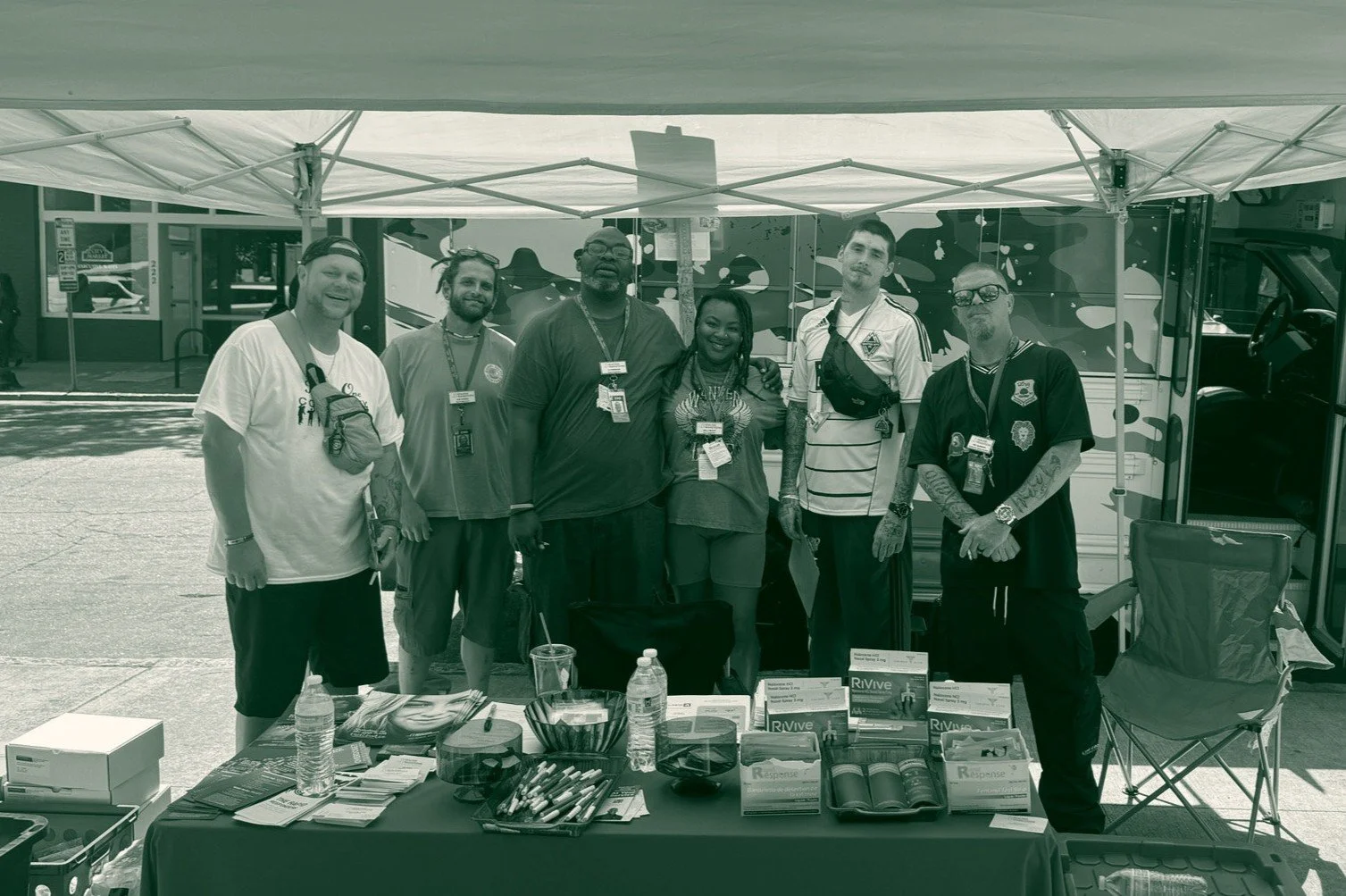
Rapid Responders & Community Programs Continuum
In Wake County, NC, Healing Transitions sends peer and EMS responders to overdose survivors within 24 to 72 hours, when re-engagement is most likely.
Emergency Departments as Bridges to Recovery
82% of ER patients linked to follow-up care in the first year, and 7 Virginia health systems are adopting the model through a free toolkit built on a $150K award.

First Responder Confidential Support Program
Rhode Island police officers and their families made 10 to 12 confidential helpline calls a week within two months of launch, on $200K over two years.