Campus Naloxone Training and Peer Recovery Model
Naloxone, Peers, and a Campus Coalition Built to Reach a Community
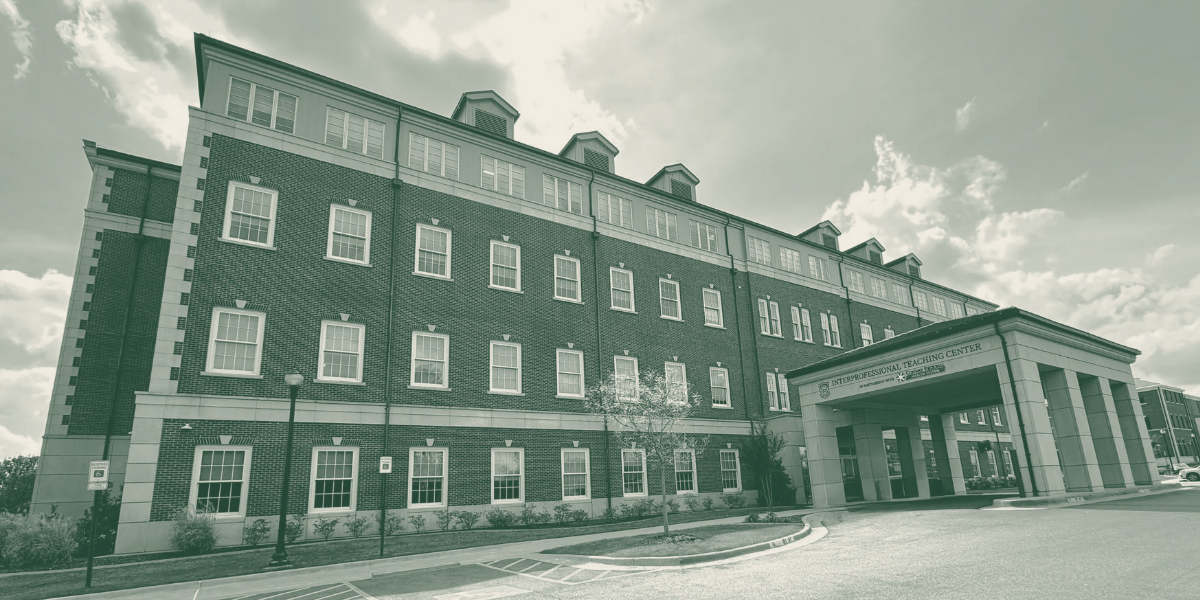
The University of Central Arkansas Addiction Studies Program operates a campus-anchored prevention and recovery model that pairs statewide naloxone distribution and training with two peer recovery specialists embedded on campus and in the community, serving 294 people in recovery services, training 874 people in overdose response, and reaching 307 people through targeted prevention interventions in its first two years of opioid settlement funding.
The Challenge They Were Addressing
Before the program existed, the University of Central Arkansas had no naloxone on campus, no campus peer recovery infrastructure, and no organized pathway for students, families, or community members in Faulkner County to access education about opioid overdose response. The program director, who joined UCA in 2018, was tracking overdose data on the West Coast and East Coast and forecasting what she believed was an inevitable wave through Middle America. Conway had recorded eight overdoses in a single year on campus. The dean of students had initially declined to act on naloxone placement, concerned that it would signal a problem the university did not want to publicly acknowledge.
The opening came through unexpected channels. An honors capstone documentary on the intersection of trauma and addiction, produced by a film major who minored in addiction studies, drew state-level stakeholders into a room together. The program director used that moment to name her next priority: naloxone on campus. The state's deputy prevention director was in the audience and responded that the state had been actively looking for a campus partner willing to host the program. The university president, when asked directly, approved it. UCA became the first college in Arkansas to participate in the Collegiate NaloxBox Bystander Rescue Program in 2022, launching with 28 naloxone boxes and recording multiple successful overdose reversals within the first year.
A second gap surfaced once distribution was in place: training. State-provided training existed, but it was uneven in depth, and most students, faculty, and community members had no way to build confidence in using naloxone or recognizing overdose. The Arkansas Opioid Recovery Partnership (ARORP) had launched a stronger, more current training framework and was offering quarterly naloxone hero awards. The program director applied in 2024, was selected, and the program shifted from a distribution-first to a training-first posture. ARORP's separate two-year, $202,367 peer recovery award followed and funded two peer recovery specialists, one campus-facing and one community-facing, completing the prevention-to-recovery continuum.
What They Built
The program runs on three integrated streams. The first is overdose education and naloxone distribution, anchored in ARORP's quarterly naloxone hero program. The program director orders naloxone in appropriate quantities, is attentive to expiration dates and stewardship, and trains the Faulkner County community upon request. A standing partnership with a 150-student first-year business course delivers semester-long reach into the incoming undergraduate class. Community trainings, open to children ages 11 and older with their parents, extend the model into family settings. Roughly 2,500 student responses to post-training surveys have informed iterations of confidence-building practices, including the planned addition of training mannequins and mock-dose naloxone for hands-on practice.
The second stream is peer recovery support, funded by a two-year $202,367 ARORP award that covered two peer recovery specialists. The community-facing specialist visits shelters across Conway, runs free SMART Recovery groups at the university's teaching community clinic, and delivers training upon request. The campus-facing specialist runs SMART Recovery groups for students, organizes town halls and candlelight vigils, and partners with the other two universities in Conway to extend services across the city. Both specialists hold or are completing graduate degrees through a sustainability arrangement that uses the university's tuition benefit to convert short-term grant positions into credentialed long-term roles.
The third stream is the prevention and recovery coalition. An on-campus overdose prevention club, launching in the 2026 academic year, will train more students and prepare them to deliver peer-led education to groups, including Greek life, athletics, and other communities that respond better to peer messengers than faculty. The program also anchors the Arkansas Collegiate Network, a statewide coalition that meets quarterly and co-hosts events, including a mobilized recovery prevention festival open to all Arkansas colleges. Annual signature events include One Pill Can Kill trainings during the Arkansas Attorney General's awareness campaign and a Wellapalooza interactive addiction-education competition that brings local elected officials to campus as honorary judges.
Sustainability planning was built in from day one of the peer recovery award. The university is absorbing the cost of the campus-facing peer specialist position with matching dollars secured by the program director, and the teaching community clinic has retained the community-facing specialist after she completed her Master of Social Work, an advanced alcohol and drug counselor certification, and EMDR training. The campus-facing specialist completed her Master of Public Health and is pursuing prevention certification. Continued ARORP naloxone hero funding sustains the training and distribution stream on a quarterly application cycle.
Key Program Components
Who You Need at the Table
What made a willing partner essential vs. optional?
The required partners in this model are not interchangeable. Without ARORP, neither the peer recovery award nor the recurring naloxone supply would exist; ARORP's structured quarterly reporting, annual partners' meeting, and online bed tracking are part of why Arkansas's settlement infrastructure is considered a national gold standard. Without the university president's direct authorization, naloxone would not have come onto campus in 2022. Without the teaching community clinic taking the position on, the community-facing peer specialist position would have ended with the grant. And without the Arkansas Collegiate Network, the program would lack a peer-learning structure for sharing materials, replicating methods, and amplifying its reach.
Helpful partners extend the model's reach. Other Conway universities, the private liberal arts campus, and a community college, are training partners and event collaborators. Local elected officials build stakeholder visibility and later become signatories of letters of support. The University of Wyoming Research Center's external qualitative study provided third-party validation for the university provost's decision to approve sustainability dollars. None of these partners is required for day-one operation, but each shortened the path to long-term durability.
Establishing partnerships was not easy. The dean of students initially declined to allow campus naloxone. One shelter declined the program for years due to naloxone-related concerns, then later requested training after a near-miss event during which a 33-year nursing veteran's first instinct during a community health rotation was to wait. She used the training instead, administered naloxone, and saved a life. That shelter is now an active partner. The pattern is consistent: initial resistance softens when graduates and individual rescues become locally visible.
Budget Breakdown
What is the minimum viable budget to replicate this?
A rural county with $75,000 can build a working version of this model by hiring or contracting with one peer recovery specialist, housed within an organization that already provides clinical services or community outreach. SMART Recovery's curriculum and toolkits are free and peer-reviewed; facilitator certification scholarships can dramatically reduce credentialing costs. Naloxone can be sourced through state opioid abatement programs at no cost, conditioned on training and reporting. An anchoring partnership with at least one local school, college, or shelter provides the training venue. The non-negotiable element is a person whose explicit job is to answer the phone, deliver training on request, and follow up on individual rescues, because that visible, repeated presence is what shifts community trust over time.
What Worked and Why
Specific decisions or design features that drove success
Going directly to the university president after the dean of students initially declined was the decision that led to naloxone being brought to campus in 2022. The program director treated the question as a matter of executive authorization rather than consensus and got a clear yes. That decision compressed two years of permission-seeking into a single meeting and made UCA the first college in Arkansas to participate in the Collegiate NaloxBox program.
Treating training, not distribution, as the core product produced the program's most durable outcomes. ARORP's training framework, which includes the biopsychosocial model of addiction, graphics showing fentanyl and carfentanil dose comparisons, and personal narrative, repositions overdose response as accidental poisoning rather than moral failing. Personal storytelling, including the program director's account of losing a cousin to fentanyl-contaminated marijuana, opens a different kind of conversation than data alone. Approximately 2,500 student responses across trainings now drive iterative improvement, including a planned addition of mannequins and mock-dose naloxone to address the half of students who report low confidence.
Embedding peer specialists at the level of culture, not just service delivery, was beyond what the grant budget alone could have funded. The community-facing peer specialist visits shelters and the teaching clinic. The campus-facing peer specialist runs SMART Recovery, town halls, and vigils. Both are integrated into student internship pipelines, meaning UCA addiction studies students complete fieldwork within the program and become the next generation of trained workforce.
Mentoring other Arkansas colleges and community colleges, even outside any grant requirement, has compounded the program's statewide influence. The program director shares grant application templates with peers, walks new applicants through ARORP's processes, and uses the Arkansas Collegiate Network to share materials. ARORP has consistently approved that outreach. The downstream effect is a statewide cohort of campus-anchored programs that look more alike than they would have if each had been built in isolation.
Early outcomes and data
874 people trained in overdose response across the first two years of the peer recovery award.
294 people served in recovery services; 147 recovery meetings hosted; 350 one-on-one peer meetings completed.
307 people reached through targeted prevention interventions; 14 prevention trainings delivered.
23 mental health referrals and 11 treatment referrals completed.
Coalition with an average attendance of 20 members; statewide visibility through the Arkansas Collegiate Network.
No campus naloxone reversal required in the most recent three-year reporting window, attributed to upstream training reach.
Both peer recovery specialist positions were retained beyond the grant period through institutional match and partner absorption.
External qualitative study completed by the University of Wyoming Research Center documenting program impact.
Lessons Learned
Plan for sustainability before you have anything to sustain. The program director began structuring institutional match, tuition benefits, and partner pickup in the first months of the peer recovery award. By the time the grant ended, both peer specialists had earned graduate credentials and had positions at their institutions. Sustainability is a design problem solved early, not a fundraising problem solved late.
Use evidence-based programming that is already free. SMART Recovery's curriculum, toolkits, and facilitator scholarship pathway closed most of the training-cost gap. ARORP's training materials were stronger than the state-provided versions. Building from validated, peer-reviewed sources is faster, cheaper, and more defensible than creating a curriculum from scratch.
Track qualitative outcomes alongside the quantitative. A nurse's email describing how the training overrode 33 years of clinical instinct, a student rescuing a stranger at an off-campus party, and a parent who used naloxone on her own son are not metrics, but they are the stories that move provosts, boards, and county commissioners. Collect them deliberately.
Build the coalition before you need it. The Arkansas Collegiate Network existed before any one campus needed it. The Faulkner County Judge and the Mayor of Conway became honorary judges for Wellapalooza before they were ever asked to sign letters of support. The community-facing peer specialist visited shelters before she ever needed a referral pathway. Relationships established in advance are the ones that hold during funding gaps and changes in leadership.
Be a good steward, publicly and visibly. The settlement funds were built on tragedy. The program director treats stewardship as non-negotiable: order what can be used, report what was done, share successes and challenges alike, and turn down activities that would compromise the integrity of the work. That posture is part of why ARORP continues to support the program.
Learn More
Interested in how the project got started? Read UCA's announcement on the opioid settlement award that helped expand peer recovery services, naloxone training, and recovery support across the community.
Replication Support Available
UCA offers peer learning calls, select site visits, naloxone training delivery guidance, grant application examples, and other resources for communities interested in building similar programs.