Same-Day Buprenorphine Care for Justice-Involved Adults

A Low-Barrier, Walk-In Model Pairing Justice Outreach with Co-Located Medical Care for People with OUD
Burlington, Vermont (Chittenden County) | VCJR and Johnson Health Center
VERMONT Urban Pop. 45k Launched 2024
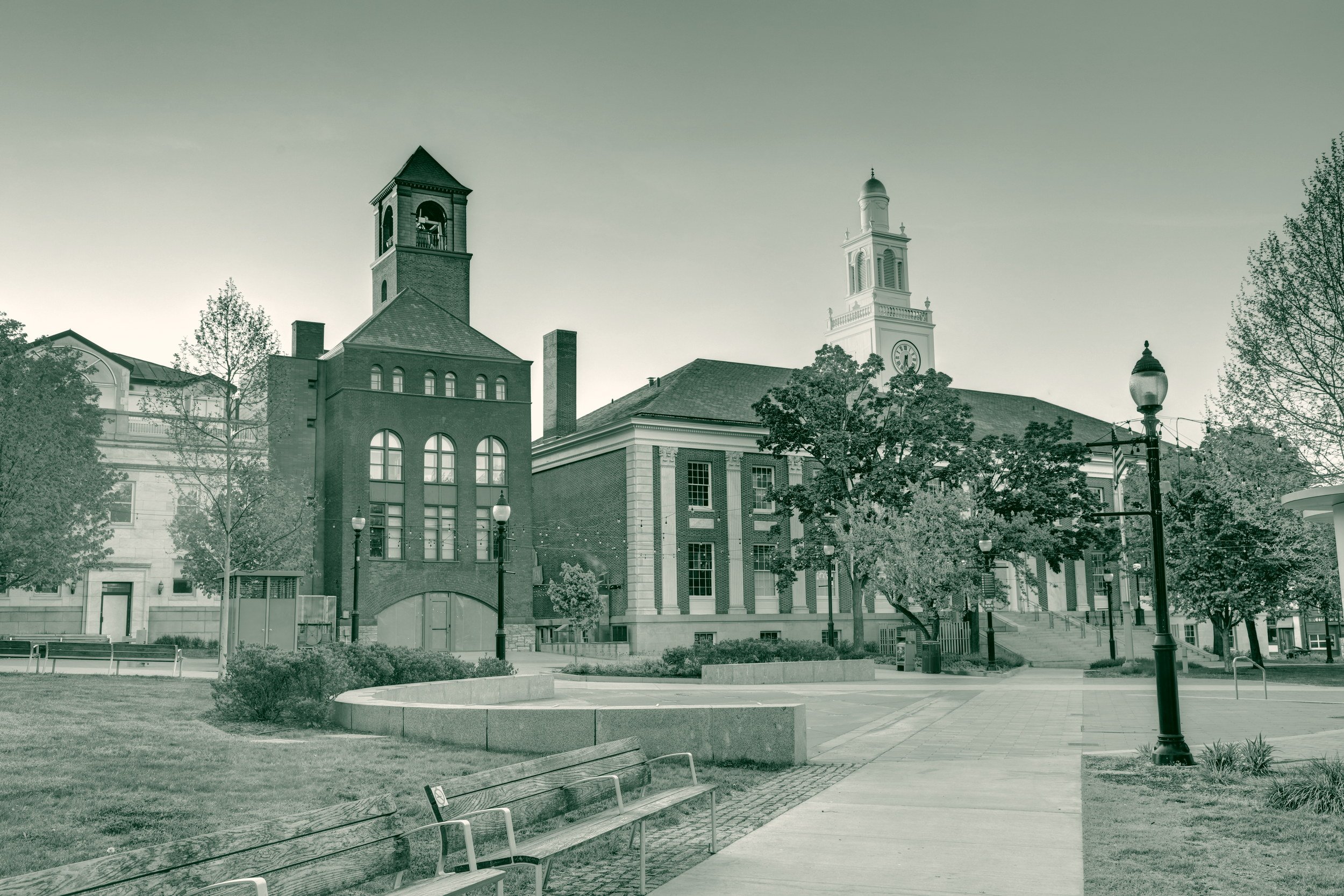
Burlington City Hall Park in Burlington, Vermont, with the brick city hall, a white church steeple beyond, and benches along a paved walkway under mature trees.
Lead Agencies
VCJR (justice outreach) and Johnson Health Center (primary care and buprenorphine)
Location
Burlington, Chittenden County, VT
Year Launched
Settlement-funded 2024-2026 (partnership began 2023)
Opioid Settlement
~$300,000 per year ($150,000 to each agency)
People Served
170+ new patients in Year 2 (target was 50); 800+ visits last year
Service Type
MAT/MOUD Access, Care Navigation, Warm Hand-Off, Reentry Support, Street Outreach
170+
NEW PATIENTS IN YEAR 2
against a target of 50, more than triple the plan
800+
PATIENT VISITS
in the most recent program year
$300K
ANNUAL SETTLEMENT FUNDING
$150K to each of the two agencies

In Burlington, Vermont, a justice outreach organization, Vermonters for Criminal Justice Reform (VCJR), and a primary care clinic, Johnson Health Center, run a walk-in, low-barrier care model that meets people with opioid use disorder where they are. It pairs trusted street-level engagement with same-day medical care, buprenorphine prescribing, and wound care, all delivered in one co-located storefront for justice-involved adults who do not fit the traditional appointment-based system.


The Challenge They Were Addressing

In Burlington, a small but visibly homeless population of adults with opioid use disorder was cycling through the criminal justice system, the emergency department, and a patchwork of outpatient programs that asked them to keep scheduled appointments, sit in clinic waiting rooms, and complete paperwork before being seen. Approximately 90 percent of the people the team now serves are living outside, many carry warrants, and most have years of difficult medical experiences behind them. The traditional appointment-based system was missing them, and they were missing it.

The clinical picture was getting worse at the same time. VCJR, a walk-in drop-in serving justice-involved adults, was seeing a sharp rise in xylazine-related wounds, untreated infections, and people developing endocarditis because there was no reliable point of medical access between the street and the emergency department. Buprenorphine prescribing was concentrated in clinics that required intake processes incompatible with the realities of unsheltered life, and the local methadone clinic only admitted new patients early in the morning, with no public transit option for many of the people who needed it most.

VCJR's co-director, who is open about her own lived experience of opioid dependency, called a nurse practitioner she trusted at Johnson Health Center, a small primary care clinic, and asked whether she had any capacity to see people at the VCJR storefront. The answer was a Tuesday pop-up with a toolbox of medical supplies. Demand was immediate and unmistakable. Within months, the two agencies were operating a co-located walk-in care model, and they applied for opioid settlement funding to formalize and expand what the community had already shown it needed.


What They Built

The program runs out of two adjacent storefronts in downtown Burlington: VCJR's walk-in drop-in for justice-involved adults, and Johnson Health Center's low-barrier medical office next door. People come in for whatever they need: a snack, wound care supplies, a ride to treatment, help with a warrant, naloxone, clothes, or simply a familiar face. They are not asked to schedule an appointment, present an insurance card, or sit in a waiting room. Once inside, they encounter both organizations working side by side: VCJR case managers who already know them, and a nurse practitioner who can prescribe buprenorphine, treat a wound, or call in a bridge prescription for someone newly released from jail.

Buprenorphine prescribing is the clinical anchor. Johnson Health Center offers the full range of products, including Suboxone, daily sublingual buprenorphine, and Sublocade injectables. The team works to move people toward injectables where appropriate, so daily medication management becomes one less obstacle. For patients who need or prefer methadone, the program helps them get into the local opioid treatment program, including arranging transportation to early-morning admission windows. Wound care, antibiotics for soft-tissue infections, and mental health medication management are delivered in the same visit, often in whichever space is most comfortable, including the VCJR drop-in floor when the medical office feels too clinical.

The two organizations are deliberately a one-stop shop. VCJR case managers act as connectors and advocates: they help clients navigate probation and parole, sign releases, communicate with public defenders, accompany clients to medical appointments and to the emergency department, and coordinate bridge prescriptions when people are released from incarceration. Johnson Health Center provides medical care and bills Medicaid where it can. It keeps antibiotics and wound supplies on hand so that someone with a serious soft-tissue infection does not have to clear the practical and psychological hurdle of walking into a pharmacy. The medical clinic is open two to three days a week in the VCJR space, and the case management team is there every day.

The program is closely integrated with Vermont's correctional medication-assisted treatment system, one of the strongest in the country. Every person entering the Vermont Department of Corrections is screened for opioid use disorder within 24 hours and started on buprenorphine or methadone within 48 hours. The team has built standing relationships with probation officers, public defenders, the Howard Center substance use testing program, and the corrections medical contractor so that someone leaving incarceration can come directly into the drop-in, secure a bridge prescription, and stay on their medication during the chaotic first days of reentry.

Key Program Components

Walk-in, no-appointment access
Clients can drop in any day VCJR is open and receive what they need that day, whether medical care, case management, supplies, or a place to sit. No scheduling, no insurance prerequisite, no waiting list.
Co-located medical office next door
Johnson Health Center rents space immediately adjacent to the VCJR drop-in and staffs it two to three days a week, so a case manager can walk a client next door in seconds when the client is ready.
Buprenorphine across the full product line
Daily Suboxone, sublingual buprenorphine, and Sublocade injectables are all offered on site, with active support for clients who prefer methadone and need help getting into the local opioid treatment program.
Wound care and stock antibiotics
The clinical team treats xylazine-related wounds and soft-tissue infections in the office or, when the client is more comfortable, in the drop-in space. Antibiotics are kept in stock so starter doses can be handed directly to clients.
Bridge prescriptions on incarceration release
The team coordinates with the corrections medical contractor and local pharmacies to fill the gap between jail discharge and the first community appointment, including for people released unexpectedly at court or on bail.
Justice system advocacy and accompaniment
VCJR case managers communicate with probation officers, public defenders, and judges on behalf of clients (with releases on file), accompany clients to court, and serve as the named point of contact for clients without stable phones or addresses.
Embedded mental health support and informal therapy
Therapists from Johnson Health Center's broader practice are available. Day to day, case managers and the nurse practitioner deliver cognitive-behavioral and dialectical-behavioral techniques in ordinary conversations rather than scheduling separate therapy visits.
Trust transfer as the engagement mechanism
VCJR's co-director, well known and trusted by clients, explicitly hands her trust to the nurse practitioner during the first visit, making clear that the medical provider will not judge and will make care as easy as possible.
Connection to existing primary care when appropriate
Staff routinely ask whether clients already have a medical home and, when they do, treat the immediate need and route clients back to their established provider with a note rather than duplicating care.
Naloxone, supplies, and concrete tangible help
Naloxone, sterile supplies, food, clothes, and rides are distributed alongside clinical care because the program treats material needs as part of medical care, not as a separate social service.

Who You Need at the Table

Required Partners
Role
VCJR (Lead Agency, justice outreach)
Operates the walk-in drop-in for justice-involved adults; provides case management, advocacy with probation and parole, court accompaniment, naloxone and supply distribution, and the trust-based engagement that brings clients into medical care.
Johnson Health Center (Lead Agency, medical care)
Provides the co-located medical office next door; staffs a nurse practitioner two to three days a week; prescribes buprenorphine, including Sublocade injectables; delivers wound care, antibiotics, and mental health medication management; bills Medicaid where possible.
Vermont Opioid Settlement Advisory Committee
State-level funder; awarded $150,000 to each agency for two consecutive program years (2024-2025 and 2025-2026) to launch and sustain the partnership.
Vermont Department of Corrections and the corrections medical contractor
Operates one of the strongest in-custody medication-assisted treatment systems in the country (screening within 24 hours, induction within 48 hours). The program coordinates on bridge prescriptions, transitions of care, and follow-up for clients leaving incarceration.
Probation and parole, public defenders, and the Burlington court
Refer clients into the program, accept releases of information, and coordinate with VCJR case managers on appointments, missed-contact alerts, and warrant avoidance.
Local opioid treatment program (methadone clinic)
Provides methadone for clients who need or prefer it; the program coordinates transportation and same-morning support to navigate the clinic's early admission window.
Helpful Partners
Role
Local hospital and emergency department
Provides specialty care for serious infections and endocarditis, donates wound care supplies, and works with the team during ED visits, helping translate between clients and hospital staff.
Established outpatient buprenorphine providers in Burlington
Continue to serve clients who are stable in their care. The program refers back to these providers rather than pulling stable clients into the walk-in model, and exchanges short clinical notes when bridging needs arise.
Howard Center substance use testing program
Provides supervised drug testing for clients on community supervision, removing testing from the relationship between treatment providers and clients.
Community donors and local volunteers
Donated office furniture, cabinets, and other startup items so settlement dollars could be directed to staffing and clinical supplies rather than fixtures.
Opioid Response Network
Provides technical assistance and connects the program to the national network of opioid settlement grantees pursuing similar low-barrier care models.

What made a willing partner essential vs. optional?

The required partners are the ones whose participation makes the model possible at all. VCJR and Johnson Health Center are required because the entire premise is the daily co-location of justice outreach and primary medical care; remove either, and the model collapses into a referral, which is exactly the arrangement this population has already shown it cannot use. The Vermont Opioid Settlement Advisory Committee is required as the funder. The Department of Corrections and its medical contractor are required because the population is constantly moving between the community and incarceration, and continuity of medication across that boundary is the difference between recovery and overdose. Probation, public defenders, the court, and the local methadone clinic are required because they hold the practical pieces of justice and treatment access the program must coordinate every day.

Helpful partners extend the model rather than enabling it. The hospital and emergency department are essential to specialty care, but the program operates regardless of whether those relationships are formalized. Established buprenorphine providers accept routed referrals and exchange notes, protecting clinic capacity and avoiding duplicated care for stable clients. The Howard Center, community donors, and the Opioid Response Network all strengthen the program; none of them is the reason a client walks through the door.


"What you need is dedicated providers. If you already have outreach workers for this population, you can draw on their time and add a part-time medical provider. That alone is what you need to start, use the infrastructure you may already have."
Jess Kirby, Director of Client Services, VCJR

Budget Breakdown

$300K
Annual Project Budget
approximately $150K to each agency per program year
2 yrs
Settlement Awarded
2024-2026; no 2026-2027 award, appeal underway
$10K
Insurance Per Agency
annual clinical liability for the new service line
Primary Funding Sources
Vermont opioid settlement allocations; Medicaid (Johnson Health Center only); each agency's general operating funds
Additional Funding
Donated office furniture, cabinets, and wound care supplies from community donors and the local hospital; in-kind staff time from each agency
Budget Category
Amount
Notes
Personnel/Staffing
Majority of both awards
VCJR used 100 percent of its $150,000 for full-time case management dedicated to this population; Johnson Health Center used the majority of its $150,000 for nurse practitioner and clinical staff time at the co-located site.
Site and Operations
Modest, Johnson Health Center only
Rent, utilities, and basic operating costs for the medical office next door; the existing VCJR storefront covers most shared overhead.
Insurance and Compliance
Approximately $10,000 per agency per year
State-required liability and clinical insurance for the new service line, in addition to standard nonprofit operating insurance.
Medications and Clinical Supplies
Modest line item
Stock antibiotics for soft-tissue infections, wound care supplies (some donated by the hospital), and small flexible funds for client transportation and emergency medication needs.
Treatment and MOUD Services
Covered through clinical operations
Buprenorphine, Sublocade injectables, and methadone access funded through Medicaid billing at Johnson Health Center and coordination with the local opioid treatment program.
Technology/Data Systems
Minimal
Existing electronic health records at Johnson Health Center and standard case management documentation at VCJR; no new technology purchased to launch.
Equipment and Furniture
Donated
Community members and partners donated office furniture, cabinets, and startup fixtures so settlement funds could go directly to direct service.
Admin/Indirect
Standard nonprofit rate at each agency
Each agency applies its standard indirect rate; the program is lean enough that indirect costs do not crowd out direct service.

What is the minimum viable budget to replicate this?

A community that already operates a walk-in or drop-in serving justice-involved adults can layer this model on for approximately $150,000 to $250,000 per year, depending on the amount of medical provider time needed. The non-negotiable line items are: one dedicated case management position to handle advocacy, accompaniment, and coordination with the justice system; part-time medical provider time (ideally a nurse practitioner or physician assistant who can prescribe buprenorphine) at one to three half-days per week; a small flexible fund for stock antibiotics, wound care supplies, and client transportation; and adequate clinical liability insurance for the new service line. Site costs can often be absorbed by an existing drop-in if there is space for the medical provider to see clients privately.


What Worked and Why

Specific decisions or design features that drove success

The single most important design decision is co-location: medical care delivered inside the outreach site rather than through a referral to a separate clinic. Other communities have tried to fix the access gap by referring clients from outreach into clinic appointments, and the referral chain breaks at every step. Putting the medical office next door, in the same building footprint as the drop-in, eliminates the handoff and makes a medical visit feel like an extension of a conversation rather than a separate appointment.

Shared philosophy between the two agencies is what makes co-location actually work. Both organizations operate with the same posture toward clients: tolerance for challenging behavior, no judgment about ongoing use, no expectation that clients arrive on time or with paperwork in order, and a willingness to meet medical care in whichever space feels comfortable. When VCJR's co-director explicitly hands her trust to the nurse practitioner during a first visit, she is staking her own credibility on the partner agency, and that only works because the agencies share values from the start.

Settlement dollars, allocated almost entirely to direct service staffing, kept the model lean and replicable. The agencies deliberately avoided spending the awards on furniture, software, or large startup procurement; community donations covered fixtures, and the hospital donated wound care supplies. The result is a budget profile another small community can plan around: a case management position and a part-time medical provider, with everything else either donated or billed.

Buprenorphine across the full product line, especially Sublocade injectables, removed daily medication management as a barrier for clients living unsheltered. Daily dosing requires a level of predictability that most clients lack. The team transitions clients to monthly injectables when clinically appropriate, which stabilizes them enough to engage with the rest of the model.

Routing stable clients back to their existing primary care providers helped prevent the model from being overwhelmed and kept the local provider community from feeling displaced. By asking every new client whether they have a medical home and bridging back when appropriate, the program signaled that it was built to fill a specific gap rather than compete with the existing system. That posture earned the program standing relationships with the other buprenorphine providers in Burlington and with the local hospital.

"You can do a lot with a little. We started with a toolbox of medical supplies and one day a week, and we just stood it up. The right providers who want to do this are what you actually need."
Caroline Butler, Co-founder and Lead Nurse Practitioner, Johnson Health Center

Early outcomes and data

  • Year 2 added more than 170 new patients, exceeding the initial growth target of 50 and more than tripling the planned expansion.

  • More than 800 patient visits in the most recent program year, with active growth in the office-based buprenorphine caseload.

  • Identified by a major Vermont buprenorphine prescribing entity as the only growing office-based buprenorphine program in Chittenden County, the largest county in the state.

  • Retention on buprenorphine in the low-barrier walk-in model, as reported by the clinical team, exceeds retention rates observed in standard appointment-based outpatient practice.

  • Documented coordination with the Vermont Department of Corrections on bridge prescriptions for clients leaving incarceration, including unanticipated court releases and bail outcomes.

  • Sustained engagement with a population that is approximately 90 percent unsheltered and has near-universal opioid use disorder, with clients frequently returning to the same site for repeat care.


Replication Guide
How to Replicate This Model
Minimum viable version
A community that already operates an outreach or drop-in program serving justice-involved adults can stand up a meaningful version of this model with one dedicated case manager and one part-time medical provider, supported by a small, flexible fund for medications, supplies, and transportation. The medical provider can begin with a once-a-week pop-up using a portable supply kit, as Johnson Health Center did in 2023, and increase frequency as demand and trust grow. The drop-in does not require a separate clinical suite on day one; a small private room or a curtained area is enough to start. What cannot be skipped is shared philosophy between the outreach side and the medical side: a willingness to see clients without appointments, in whichever space they prefer, without judgment about ongoing use.
First three steps
1
Find an existing trusted access point and a partner medical provider who shares values Replication starts with two people: an outreach worker who already has the trust of justice-involved clients and a medical provider willing to deliver care in the outreach setting. The shared philosophy is what makes co-location work; identify both halves before designing anything else.
2
Start with a once-a-week pop-up and grow as demand grows The medical provider does not need a dedicated clinic to begin. Johnson Health Center started with a toolbox of medical supplies and one half-day a week at the VCJR drop-in. Volume builds quickly when trust is already in place, and frequency can scale from there.
3
Spend settlement dollars on direct service, not infrastructure Use the funding for case management and medical provider time. Furniture, cabinets, and basic fixtures can be donated; medications and supplies can be partly absorbed through Medicaid billing and hospital donations. Settlement awards stretch much further when the program does not try to build a finished clinic before serving anyone.
Common Pitfalls
Treating co-location as a referral relationship The model only works when medical care is delivered in the outreach setting, in whichever space the client prefers, by a provider the outreach team can vouch for personally. Two agencies exchanging referrals from separate offices will see most clients fall out of the chain.
Underestimating insurance and compliance costs State-required clinical insurance for a new service line is a real, often-overlooked line item. In Vermont, each agency added roughly $10,000 per year. Plan for it in the first-year budget rather than absorbing it mid-year.
Building a finished clinic before serving the first client Programs that spend the first year of settlement funding on furniture, build-out, and software rarely have the clinical credibility to attract clients when the doors open. Start with a toolbox, grow the practice, and let the space catch up to demand.
Competing with existing local providers instead of bridging to them Pulling stable clients out of established buprenorphine practices into a walk-in model creates tension with the local provider community and overwhelms the new program. Ask every new client about existing primary care and bridge back when appropriate.
Assuming the corrections handoff will manage itself Even in a state with one of the strongest in-custody MOUD programs in the country, the handoff to community care drops people, especially during unanticipated releases. Build standing relationships with the corrections medical contractor, pharmacies, and probation so bridge prescriptions can be arranged the same day.

Lessons Learned

  • Co-locate; do not co-refer. The single most consequential design decision is to place the medical office within the same building footprint as the outreach storefront. A referral, even a warm one, asks the client to navigate a transition this population has already shown it cannot reliably make.

  • Shared philosophy is the non-negotiable. Two agencies can share a hallway and still fail if they hold different beliefs about how to treat clients. The model works because both teams answer the same way when a client arrives with a wound, a warrant, and no appointment.

  • Start small and let demand build the case. A one-day-a-week pop-up that grew into a full clinical practice is more credible to funders, partners, and clients than a fully built program announced in advance. Demand is the data.

  • Spend the award on people, not stuff. Direct service staffing is the highest and best use of settlement dollars. Furniture and fixtures can be donated; medications and supplies can be partly billed or absorbed. Every dollar spent on personnel goes to the bedside.

  • Plan for the funding gap you can already see. Settlement funding in Vermont is year-to-year and not guaranteed. The program is building Medicaid revenue, foundation relationships, and an appeal strategy so the model can survive a funding cycle without an award.


Primary Contacts
Jess Kirby
Director of Client Services, Vermonters for Criminal Justice Reform (VCJR)
Caroline Butler
Co-founder and Lead Nurse Practitioner, Johnson Health Center
Previous
Previous

How Six Rural Counties Decide What to Fund

Next
Next

Police + Peer Post Overdose Response Team