Rural Treatment Court Built on Existing County Capacity
A Five-Phase Court Model Shared by a City and a County
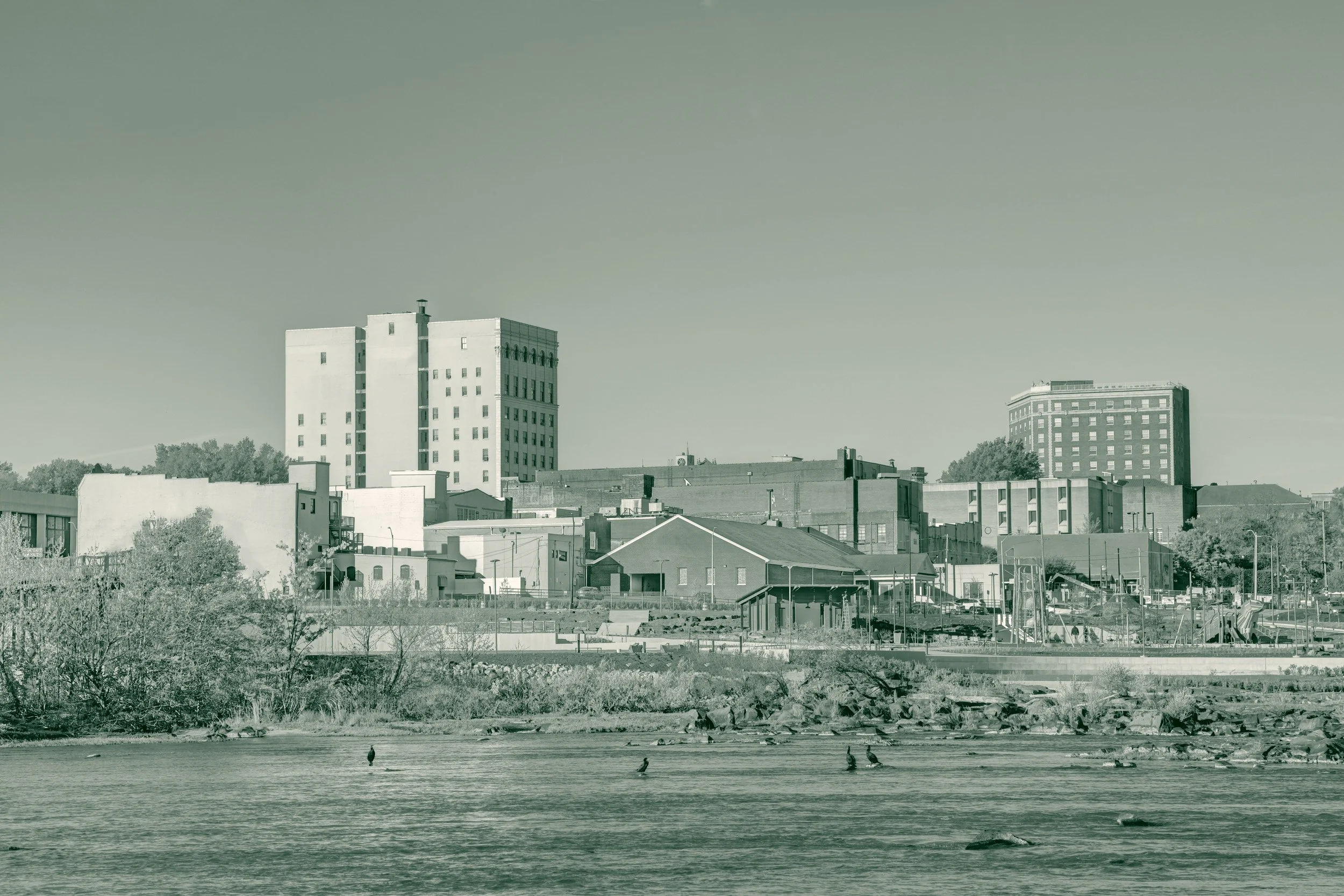
The Danville-Pittsylvania Treatment Court is a five-phase, court-supervised recovery program for justice-involved residents of the City of Danville and Pittsylvania County who have a substance use disorder, pairing circuit court oversight with treatment, peer support, and basic needs assistance as an alternative to straight incarceration, now strengthened by $209,000 per year in opioid settlement funding through the Recovery 360 grant.
The Challenge They Were Addressing
The City of Danville and Pittsylvania County sit in a rural part of southern Virginia that has experienced high poverty and unemployment for years. When the original steering committee reviewed local data, about 24.4% of the population in the Danville and Pittsylvania area was considered to be in poverty, compared with a statewide average of about 10.7%. Local unemployment was about 8.7%, compared with a state rate near 5.2%. The closure of the textile mills, including Dan River Mills in 2006, put thousands of working-class residents out of work almost at once, with few industries ready to replace those jobs.
That economic strain tracked closely with substance use. From 2022 through 2024, the City of Danville and Pittsylvania County ranked in the top 10 in the Commonwealth of Virginia for opioid overdose death rates. Local leaders watched the same residents cycle through arrest, jail, release, and re-arrest, with substance use, housing insecurity, and food insecurity driving much of that repeated criminal justice involvement.
Circuit court judges and their partners saw a system in need of a rehabilitation option beyond incarceration. Incarceration is sometimes necessary, but on its own, it does not address the treatment, coping skills, and community connections a person needs to stop the cycle. The judges and the steering committee concluded that the community needed a structured, court-supervised pathway to reduce recidivism and help people build recovery before they left supervision.
What They Built
The Danville-Pittsylvania Treatment Court is a five-phase program built within the 22nd Judicial Circuit, the highest felony court in Virginia before appeal. A steering committee was formed in 2019 to evaluate local needs. The original launch was set for 2020, but the COVID-19 pandemic delayed training and startup, so operations began in 2022. The court draws on existing infrastructure: the circuit court, state probation and parole, and the Danville-Pittsylvania Community Services Board.
A referral can originate through a defense attorney, the Commonwealth's Attorney, probation and parole, or the Community Services Board. In practice, the defense attorney usually requests that the Commonwealth's Attorney review eligibility. Eligibility excludes crimes involving violence, gun charges, the majority of sex offenses, charges in other jurisdictions, and people outside the catchment area, since a participant has to be physically within the City of Danville or Pittsylvania County. The circuit court judge holds final approval. Once approved, the participant enters an agreement with the Commonwealth's Attorney and defense counsel that may involve charge dismissal, charge reduction, or sentence reduction upon successful completion. A trained clinician then completes a clinical evaluation using ASAM and SAMHSA criteria.
The program runs across five phases over a minimum of 18 to 24 months, sometimes longer. Phase one lasts at least 60 days and focuses on stabilization and crisis intervention, which can include help with housing, food, detox, and inpatient treatment. Participants attend court once a week and spend most other days at the Community Services Board or with probation, joining relapse prevention groups, peer support, and individual counseling. As participants stabilize, later phases step down the frequency of court appearances and probation contact, extend curfews, and shift the focus toward building recovery capital and a sober support network. Home visits continue throughout, with the case manager and sometimes the peer specialist making contact in the community as well as monthly visits by probation.
Completion is treated as a community event. The program holds a graduation in open court, where the judge recognizes the participant and, when the family is comfortable, the family as well. Graduates receive a diploma, a plaque, and a challenge coin. City council members, the board of supervisors, law enforcement, the Commonwealth's Attorney, the public defender's office, probation, and Community Services Board staff are invited so the community can see that the program works.
Key Program Components
Who You Need at the Table
What made a willing partner essential vs. optional?
A required partner is one without whom the court could not operate day to day: the judges who run the court, the Community Services Board that delivers treatment and manages the grant, the Commonwealth's Attorney who controls eligibility and the plea agreement, the defense bar that represents participants, and state probation and parole that supervises them. Most of these team members carry the treatment court alongside their regular duties, which makes the working relationships and shared purpose central to keeping the program running.
A strong, respectful relationship with the judge matters most. The coordinator works with the judge daily, bringing both problems and successes, and that rapport keeps the court moving. Law enforcement is a helpful partner that adds reach: officers help with curfew checks and outreach, and show participants that law enforcement wants them to succeed. But the program can run in a given week even when a law enforcement officer is not present.
Budget Breakdown
What is the minimum viable budget to replicate this?
The program's own history shows the minimum viable budget is far below its current level. The court began operating in 2022 and ran for its first few years on far less than $209,000 a year, building on existing infrastructure. For a rural county starting with roughly $75,000, the advice is to use the court, probation, and Community Services Board capacity already in place, fund a dedicated coordinator function, and budget realistically for basic needs and treatment flexibility. Money set aside for housing, food, transportation, and inpatient treatment should be protected, and the budget should be written so that line items can be adjusted as real needs emerge.
What Worked and Why
Specific decisions or design features that drove success
Implementing a dedicated coordinator function changed how the program ran. A coordinator with real time to devote to the court can track funding opportunities, make connections across agencies, and handle the behind-the-scenes work that keeps the program moving. Without someone monitoring the field, the program would not have learned that OAA and DCJS funding was available.
Benchmarking with similar rural courts gave the team a working template. Judges and staff visited established programs in nearby localities, including counties that border Pittsylvania, because these localities shared similar geography, industries, and crime patterns. Seeing a running program showed the team what worked, what did not, and how to adapt another court's design to local conditions rather than copying it wholesale.
A strong relationship between the coordinator and the judges anchored the work. The coordinator works with the judges daily and has the rapport to bring both problems and successes to them. Inviting judges to graduations lets them see the program succeed firsthand, which in turn encourages future referrals.
Cross-system respect made a difference. Treatment and corrections do not always reach the same goal the same way, and early differences in approach are common. The team worked to build mutual respect between the treatment and corrections sides, treating education about each partner's role and consistent teamwork as the way to move forward together.
Using existing CSB, probation, and court infrastructure kept startup costs low and made the model replicable. Probation and parole, the Community Services Board, and the court were already in place, so the program could restructure and build on what existed rather than create everything from scratch. Understanding the OAA and DCJS funding options, with technical assistance from the Virginia Opioid Abatement Authority, helped the team secure funding once operational needs were clear.
Early outcomes and data
36 participants have been served to date.
Operating continuously since 2022, with OAA Recovery 360 funding added in 2025 (fiscal year 2026).
Five-phase model with a minimum program duration of 18 to 24 months, sometimes longer.
$150,000 reserved annually for inpatient treatment for up to 15 participants, at $10,000 per participant.
Community graduations are held in open court with local officials, law enforcement, and partners invited.
Featured by the Virginia Opioid Abatement Authority as a strong example of opioid settlement-funded work.
Lessons Learned
Fund a dedicated coordinator function. A coordinator with real-time access to the court is the single change that has most improved operations, from tracking funding to making the cross-agency connections that keep participants moving.
Build on the infrastructure you already have. The court, probation and parole, and the Community Services Board were already in place. Using and restructuring existing capacity, rather than building from scratch, kept the program affordable and replicable.
Build relationships across the system. A respectful, working relationship with the judge and mutual respect between treatment and corrections partners carried the program through early differences in approach. Teamwork is the most important ingredient.
Learn the funding options and the rules. Understanding the opioid settlement field, OAA and DCJS grants, and the technical assistance provided by the Virginia Opioid Abatement Authority enables the team to fund the work and stay within allowable uses.
Make graduations a community event. Public graduations in open court, with local officials and partners invited, show the community the program works and encourage more referrals.
Expect a gradual mindset change. Shifting a community and its systems toward treatment as an alternative to straight incarceration takes time and steady relationship building, but the slow pace does not make the work any less worth doing.